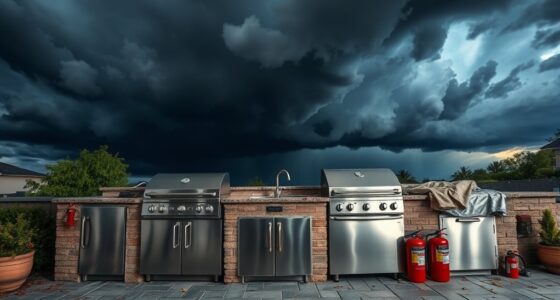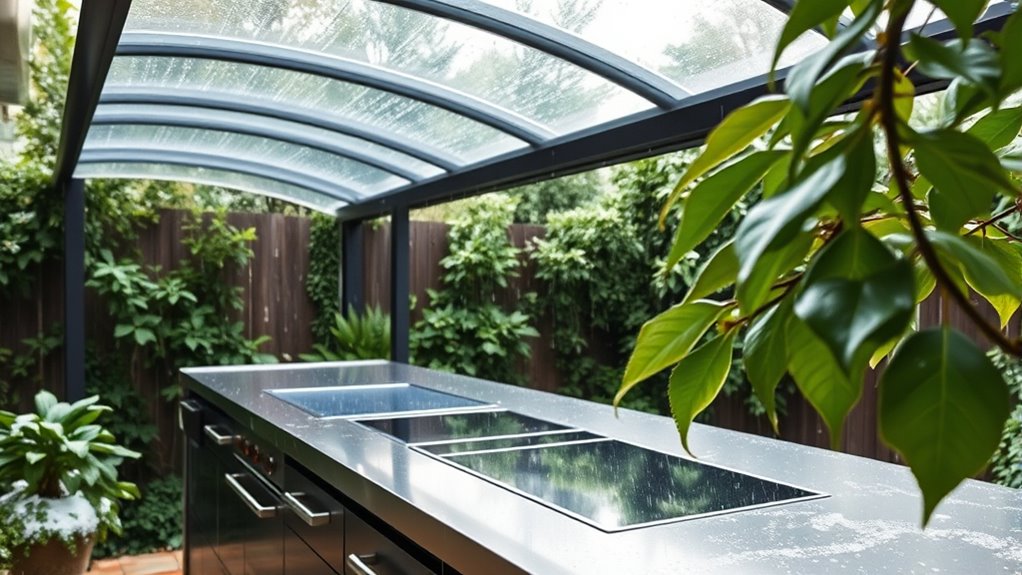

To safeguard your outdoor kitchen from rain and snow, use weather-resistant furniture and install effective drainage solutions to prevent water buildup. Cover appliances and surfaces with protective canopies or weatherproof covers during storms, and apply sealants to countertops and cabinets to block moisture infiltration. Additionally, guarantee proper ground grading and channel water away from your space. Taking these steps will help preserve your outdoor kitchen’s durability and appearance year-round—continue to explore for more tips to keep it protected.
Key Takeaways
- Use weatherproof furniture made from treated materials to prevent rust, warping, and fading.
- Install effective drainage systems like gravel, permeable pavers, and perimeter drains to avoid water pooling.
- Cover appliances and surfaces with weather-resistant covers or canopies during storms and snowfalls.
- Apply and regularly reapply weatherproof sealants on countertops and cabinets to prevent moisture damage.
- Store removable items indoors and implement protective structures to shield the outdoor kitchen during heavy rain and snow.

Creating a durable outdoor kitchen requires more than just choosing the right appliances and materials; it also involves protecting your setup from the elements. Rain and snow can cause significant damage if you don’t take proper precautions. One of the first steps is selecting weatherproof furniture that can withstand moisture and temperature fluctuations. Look for pieces made from materials like treated wood, resin, or powder-coated metal—these resist rust, warping, and fading. Weatherproof furniture not only keeps your space looking fresh but also reduces the need for frequent replacements, guaranteeing your outdoor kitchen remains functional and inviting year-round.
Choose weatherproof furniture like treated wood, resin, or powder-coated metal for lasting outdoor kitchens.
However, furniture alone isn’t enough. You must also address how water drains away from your setup. Effective drainage solutions are essential for preventing pooling of water that can lead to wood rot, mold, or other damage. Installing proper drainage systems involves grading the ground to slope away from your kitchen area and using gravel or permeable pavers to facilitate water runoff. Adding drains or gutters around the perimeter can further channel rainwater away from sensitive appliances and furniture. These steps help maintain a dry environment, which is vital for preserving the integrity of your appliances and the longevity of your furniture.
Additionally, consider installing protective covers or canopies over your outdoor kitchen. These structures act as barriers against rain and snow, keeping your appliances and surfaces dry. When choosing covers, make sure they’re weather-resistant and fit snugly to prevent water from seeping through. During heavy storms or winter months, it’s wise to cover your appliances and furniture entirely or store removable items indoors if possible. This extra layer of protection minimizes exposure and reduces maintenance needs.
Don’t forget about the importance of proper sealing on countertops, cabinets, and other surfaces. Applying weatherproof sealants creates an additional barrier against moisture infiltration, which is especially important during winter when snow can melt and refreeze. Regularly inspecting and reapplying these sealants guarantees they remain effective over time.
Frequently Asked Questions
Can I Add Heating Elements to My Outdoor Kitchen for Winter Use?
Yes, you can add heating options to your outdoor kitchen for winter use. Consider electric, propane, or infrared heaters for effective winter installation. These options provide warmth and extend your outdoor cooking season. When installing, guarantee proper safety measures and insulation. You might also want to consult a professional to ensure your heating elements are correctly integrated and safe, making your outdoor space cozy even in colder months.
What Materials Are Best for Outdoor Kitchen Cabinets in Snowy Climates?
Think of your outdoor kitchen as a fortress against winter’s chill. You should choose weather-resistant finishes and durable cabinetry materials like stainless steel, composite, or PVC. These materials act as armor, shielding your cabinets from snow and moisture. By selecting sturdy, weatherproof options, you guarantee your outdoor kitchen remains functional and beautiful, no matter how harsh the climate. Your outdoor space will stand strong through winter’s trials.
How Often Should I Inspect Outdoor Kitchen Covers for Damage?
You should inspect your outdoor kitchen covers at least once each season to guarantee cover durability. Regular seasonal inspections help you catch any tears, holes, or signs of wear early, preventing damage to your outdoor kitchen during harsh weather. If you notice any issues, repair or replace the cover promptly to maintain protection. Staying proactive with these inspections keeps your outdoor kitchen safe and in great condition year-round.
Are There Any Maintenance Tips for Outdoor Appliances Exposed to Rain?
To maintain outdoor appliances exposed to rain, regularly clean and dry them to prevent rust and corrosion. Use protective covers for outdoor furniture and appliances, especially during bad weather. Keep the area tidy to deter pests, which can damage wiring or create nests. Check for leaks or damage after storms, and apply weatherproof sealants as needed. Consistent maintenance guarantees your outdoor kitchen remains functional and pest-free, even in rainy conditions.
Can I Install a Drainage System to Prevent Water Accumulation Around My Kitchen?
Yes, you can install a drainage system to prevent water accumulation around your outdoor kitchen. A well-designed drainage system directs water runoff away from your appliances and countertops, reducing water pooling and potential damage. You should evaluate the slope of your yard and install gutters or French drains where necessary. Properly managing water runoff keeps your outdoor space dry, safe, and ready for use, even after heavy rain.
Conclusion
By shielding your outdoor kitchen from rain and snow, you’re giving it a cozy umbrella to weather any storm. Think of your space as a brave explorer, standing tall against nature’s whims, ready for countless gatherings and delicious meals. With the right protection, you turn your backyard into a fortress of flavor and fun, no matter the weather. So, gear up and keep your outdoor culinary haven safe—your adventures are just beginning, rain or shine.