
To prevent heat and smoke build-up in your covered outdoor kitchen, guarantee proper ventilation by installing effective smoke extraction systems, such as exhaust hoods or dedicated vents connected to your roof or walls. Position your grill near openings like windows or vents to promote cross-ventilation and natural airflow. Using high-quality fans and strategically placing openings will help keep the air fresh and safe. Keep exploring for more tips to enhance your outdoor cooking environment.
Key Takeaways
- Install dedicated smoke extraction systems like exhaust hoods or vents connected to outdoor roofs or walls.
- Position grills near openings and use cross-ventilation to promote airflow and disperse heat and fumes effectively.
- Design outdoor kitchens with open walls or strategic openings to enhance natural airflow and reduce heat and smoke buildup.
- Incorporate high-quality ventilation solutions that create direct pathways for smoke and heat to escape efficiently.
- Regularly maintain and optimize ventilation components to ensure continuous removal of heat, smoke, and airborne pollutants.

Creating a well-ventilated outdoor kitchen is essential for safety, comfort, and enjoying your space to the fullest. Proper ventilation ensures good indoor air quality, which is crucial when you’re cooking and entertaining outdoors. Without adequate airflow, smoke, heat, and fumes can linger, making your cooking experience unpleasant and potentially hazardous. One of the most effective ways to improve ventilation is by installing smoke extraction systems that are designed specifically for outdoor kitchens. These systems help pull smoke, steam, and odors away from the cooking area, maintaining a fresh atmosphere and preventing the buildup of heat and fumes.
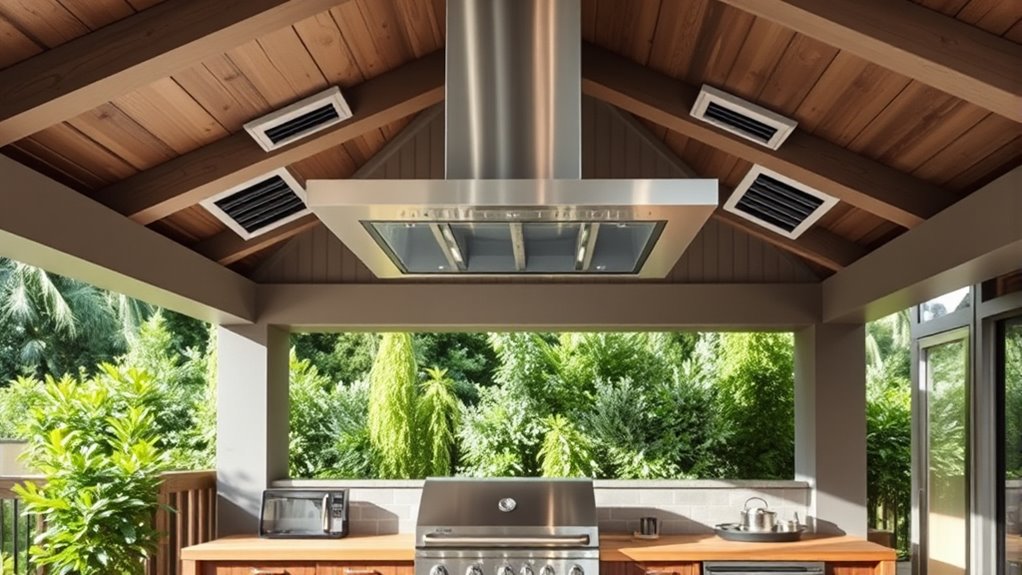
When you focus on indoor air quality, you’re also protecting yourself and your guests from exposure to airborne pollutants. Smoke and cooking odors can quickly become overwhelming, especially in covered outdoor kitchens where natural airflow might be limited. Smoke extraction systems act as a barrier, capturing and venting smoke directly out of the space. This not only keeps the air cleaner but also reduces lingering smells that can cling to furniture and clothing. For ideal performance, consider installing high-quality exhaust hoods or dedicated venting systems that connect to your outdoor roof or wall. These setups create a direct pathway for smoke and heat to escape, preventing them from spreading throughout your cooking area.
In addition to smoke extraction, you should also evaluate your space for proper cross-ventilation. Strategically placed openings, such as windows, vents, or open walls, promote airflow and help disperse heat and fumes more effectively. When designing your outdoor kitchen, think about positioning your grill or cooktop near these openings to maximize the efficiency of your smoke extraction systems. Proper ventilation not only improves air quality but also makes your outdoor kitchen safer by reducing the risk of heat exhaustion and smoke inhalation. Incorporating proper airflow techniques can further enhance the overall ventilation effectiveness and comfort of your outdoor cooking space.
Frequently Asked Questions
How Can Natural Ventilation Be Optimized in Outdoor Kitchen Designs?
You can optimize natural ventilation in your outdoor kitchen by designing a well-planned kitchen layout that promotes airflow. Position openings like doors and windows strategically to maximize cross-ventilation, and consider incorporating adjustable vents or louvers. This setup improves indoor air quality by dispersing heat and smoke efficiently, creating a comfortable cooking environment. Properly designed ventilation guarantees you enjoy fresh air while cooking, making your outdoor kitchen more enjoyable and functional.
What Are the Best Materials to Enhance Airflow and Reduce Heat Retention?
Imagine a breeze flowing through your outdoor kitchen, whisking away smoke and heat. To enhance airflow and reduce heat retention, choose materials like aluminum or stainless steel for countertops and fixtures, as they reflect heat and stay cool. Use open, breathable roofing options, and incorporate mesh or perforated panels for airflow enhancement. These heat reduction techniques keep your space comfortable and breezy, making cooking outdoors a true pleasure.
How Do Local Climate Conditions Affect Ventilation Strategies?
You should adapt your ventilation strategies based on local climate conditions to guarantee ideal airflow and comfort. In hot, humid areas, prioritize enhanced ventilation standards like larger openings or exhaust fans to prevent heat and moisture buildup. In colder climates, focus on insulation and controlled airflow to maintain comfort. Climate adaptability ensures your outdoor kitchen remains functional year-round, so tailor your ventilation system to meet specific weather patterns and environmental factors for best results.
Can Ceiling Fans Improve Smoke Dispersal in Covered Kitchens?
Ceiling fans can enhance smoke dispersal in covered kitchens when strategically positioned, ideally near the cooking area to promote airflow. Use smoke dispersal techniques such as oscillating fans or exhaust hoods in conjunction with ceiling fans for maximum results. Proper placement ensures the fans help redirect smoke away from seating and cooking zones, making your outdoor kitchen more comfortable and safer. Remember, fans alone might not fully eliminate smoke without proper ventilation.
What Maintenance Practices Ensure Ongoing Effective Ventilation?
You should regularly perform air filter maintenance and ventilation system inspections to keep your outdoor kitchen’s airflow ideal. Don’t overlook these tasks, even if they seem minor, because clogged filters and unnoticed issues can reduce effectiveness. By staying on top of cleaning filters and scheduling routine inspections, you ensure heat and smoke are properly vented, creating a safer, more comfortable cooking environment that works efficiently year-round.
Conclusion
By prioritizing proper ventilation, you create an outdoor kitchen where heat and smoke dissipate like a gentle breeze, making cooking enjoyable and safe. Good airflow prevents buildup, keeps your space comfortable, and guarantees fresh air circulates freely. Think of it as giving your kitchen a gust of fresh air every time you cook. So, invest in the right ventilation solutions, and you’ll enjoy outdoor cooking without the haze or heat, just clear skies and good vibes.