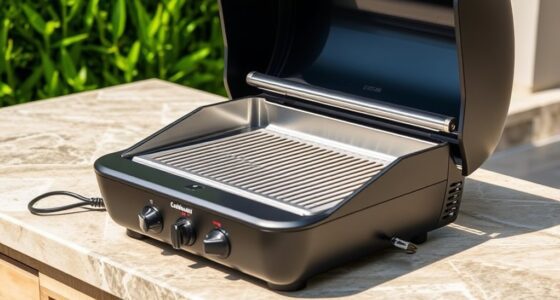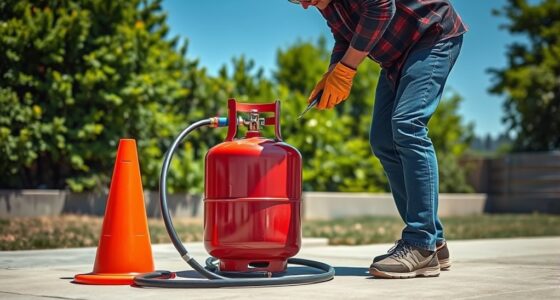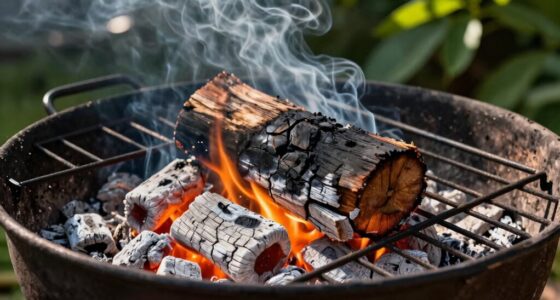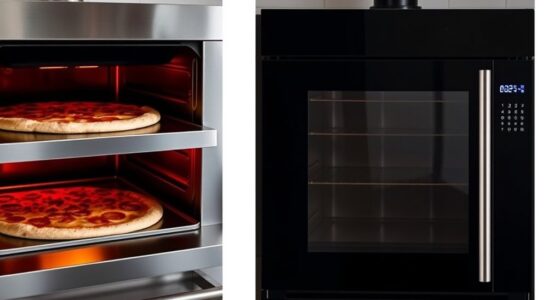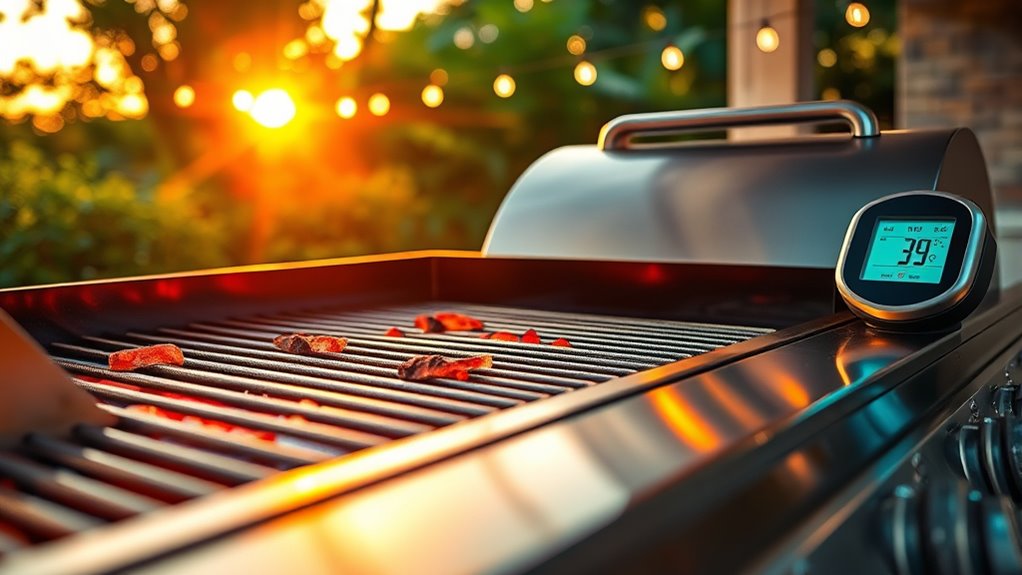
To determine how much heat your outdoor kitchen needs, consider your cooking style and food types. Smaller grills with 20,000 to 30,000 BTUs suit casual grilling, while larger setups requiring even heat may need 50,000 BTUs or more. Balance BTU output with grill design for better heat control and even cooking. If you want to make certain your outdoor setup hits the right mark, keep exploring how to match BTUs to your needs.

Get garden gear delivered free with Prime
- Fast, free delivery on millions of items
- Prime Video, Amazon Music and more included
- Member-only deals all year
Key Takeaways
- Match BTU output to the size of your cooking area for even heat distribution.
- Consider your typical cooking style and food types to determine appropriate heat levels.
- Larger outdoor kitchens require higher BTUs to ensure consistent, powerful heat across multiple zones.
- Balance BTU ratings with grill design and airflow for effective heat control and safety.
- Understanding your specific needs helps select a grill with the right BTU range for optimal performance.

Ever wonder what a BTU really is and why it matters? Well, BTU stands for British Thermal Unit, and it’s a way to measure heat energy. When you’re shopping for a gas grill or planning your outdoor kitchen, understanding BTUs can seem confusing. But knowing how BTUs relate to heat output helps you choose the right equipment to cook your favorite meals perfectly. The heat output of a gas grill, for example, is often expressed in BTUs per hour, which indicates how much heat it can produce. A higher BTU rating generally means more heat, but it doesn’t automatically guarantee better cooking, as other factors like grill design and airflow also influence performance.
If you want to cook steaks with a good sear or quickly boil water for your pasta, your grill needs enough heat output. A typical gas grill might range from 20,000 to 50,000 BTUs. Smaller grills designed for casual use usually have lower BTUs, around 20,000 to 30,000, which are suitable for light grilling. Larger models meant for serious outdoor cooking can have 50,000 BTUs or more, providing ample heat for roasting, searing, or cooking multiple dishes at once. But don’t assume that more BTUs always mean better results. A grill with excessively high heat output can be difficult to control and might burn food if you’re not careful. It’s about matching the heat output to your cooking style and needs.
When considering your outdoor kitchen, think about what you plan to cook and how often you’ll use it. If you mostly grill burgers and hot dogs, a moderate BTU range is enough. If you’re into grilling steaks, seafood, or doing large barbecues, you’ll want a gas grill with higher BTUs to ensure consistent heat. Also, keep in mind that the size of your cooking area impacts heat requirements. A larger grill surface needs more BTUs to maintain even heat across the entire area, preventing cold spots and ensuring everything cooks evenly.
Ultimately, understanding BTUs helps you make smarter decisions about your outdoor cooking setup. It’s not just about getting the highest number; it’s about finding the right balance of heat output for your specific needs. A well-chosen gas grill with the appropriate BTU rating will give you better control, more consistent results, and a more enjoyable outdoor cooking experience. Additionally, understanding the relationship between BTUs and fire safety can help you operate your grill more responsibly. So, next time you’re browsing grills or planning your outdoor kitchen, remember that BTUs are a key factor in how well your setup will perform.
As an affiliate, we earn on qualifying purchases.
Frequently Asked Questions
How Does Outdoor Weather Affect BTU Requirements?
Outdoor weather fluctuations considerably impact your BTU requirements. In colder seasons, you’ll need higher BTU output to stay warm, while warmer weather means less heat is necessary. Seasonal adjustments are essential for efficient heating, so consider your local climate and changing temperatures. By tailoring your outdoor heat sources accordingly, you guarantee comfort year-round without overspending or underheating, making your outdoor kitchen more enjoyable regardless of the weather.
Can I Upgrade My Outdoor Kitchen’s BTU Capacity Later?
Yes, you can upgrade your outdoor kitchen’s BTU capacity later. Think of it as a modular upgrade, allowing you to expand your culinary horizon without starting from scratch. Just make certain the new components are compatible with your existing setup and fuel type. This flexibility lets you tailor your outdoor cooking experience, giving you more heat and power when hosting larger gatherings or craving more intense grilling sessions.
Are Higher BTUS Always Better for Outdoor Cooking?
Higher BTUs aren’t always better for outdoor cooking. They can boost cooking versatility, allowing you to handle larger meals or searing at high heat. However, more BTUs often mean lower fuel efficiency, increasing your costs and environmental impact. Consider your cooking style and space. Opt for a balance where you get enough heat for your needs without sacrificing fuel efficiency, ensuring your outdoor kitchen remains practical and versatile.
How Do I Measure the Actual Heat Output of My Grill?
Ever wondered how to measure the actual heat output of your grill? You can use measuring techniques like an infrared thermometer or a heat flux sensor to get accurate readings. Simply aim the infrared thermometer at the cooking surface to assess surface temperature, which helps determine heat output. These methods give you a clear picture of your grill’s performance, ensuring you cook with the right amount of heat for perfect results every time.
What Safety Precautions Are Needed With High-Btu Appliances?
You should always prioritize fire safety when using high-BTU appliances. Keep a fire extinguisher nearby, guarantee proper ventilation, and never leave the appliance unattended. Regular appliance maintenance is essential to prevent gas leaks or blockages that could cause hazards. Follow manufacturer instructions carefully, check for damage before each use, and keep combustible materials away from high-heat areas. These precautions help protect you and ensure safe outdoor cooking experiences.
outdoor kitchen grill 50,000 BTUs
As an affiliate, we earn on qualifying purchases.
As an affiliate, we earn on qualifying purchases.
Conclusion
Don’t let the idea of calculating BTUs intimidate you. Knowing your outdoor kitchen’s heat needs guarantees you pick the right appliances for perfect cooking every time. Sure, it might seem complicated at first, but once you understand the basics, you’ll feel confident in making the right choices. With the right setup, you’ll enjoy hassle-free grilling and outdoor dining. So go ahead—embrace the process and create your ideal outdoor kitchen today!
As an affiliate, we earn on qualifying purchases.
best outdoor grills for searing steaks
As an affiliate, we earn on qualifying purchases.
As an affiliate, we earn on qualifying purchases.
Fall yard work Picks
leaf blowers
As an affiliate, we earn on qualifying purchases.