To keep your outdoor cooking safe, always store raw meats, seafood, and perishable items in a cooler with ice packs at below 40°F (4°C), and keep them separate from ready-to-eat foods. Handle ingredients carefully—wash utensils and surfaces thoroughly after each use, and avoid leaving foods out in the “danger zone” for too long. Proper temperature control and quick refrigeration of leftovers are key. Continue exploring these essential tips to make certain your outdoor meals are safe and enjoyable.
Key Takeaways
- Keep raw meats refrigerated until just before cooking and store separately from ready-to-eat foods.
- Use insulated coolers with ice packs to maintain perishable items below 40°F (4°C) during outdoor storage.
- Wash utensils, cutting boards, and surfaces with hot, soapy water after each use to prevent cross-contamination.
- Store leftovers promptly at safe temperatures and refrigerate or freeze within two hours of cooking.
- Avoid leaving perishable foods in the “danger zone” (40°F–140°F) for extended periods to prevent bacterial growth.
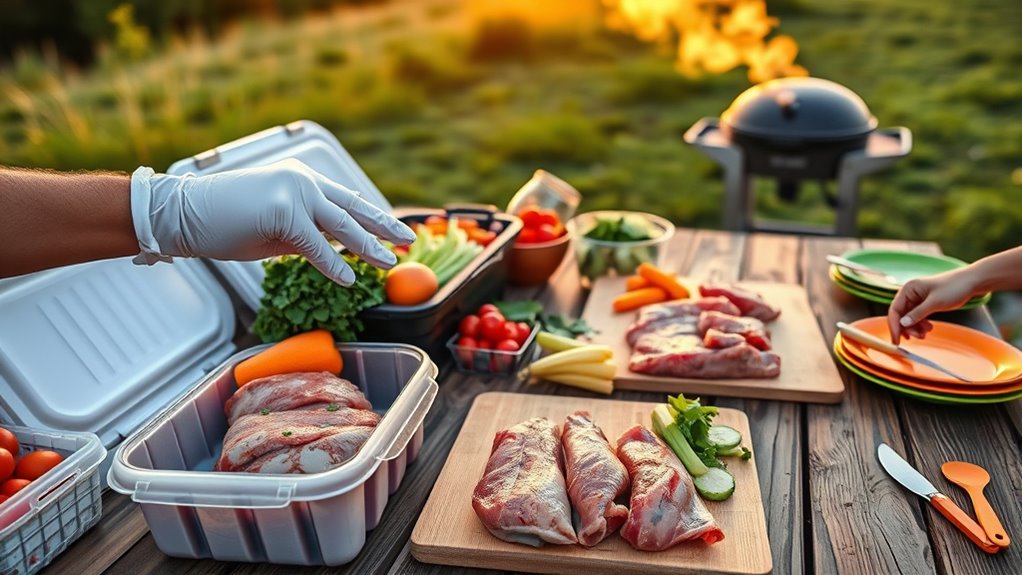
Outdoor cooking is a fun way to enjoy meals, but it also requires careful attention to food safety. When you’re marinating ingredients, it’s essential to use proper techniques to prevent cross-contamination and guarantee your food stays fresh and safe. Always marinate in the refrigerator, never on the countertop, and keep the marinade separate from the raw meat or vegetables. If you plan to use the marinade as a sauce later, set aside a portion before adding raw ingredients, so you avoid contaminating the cooked portion. This simple step helps prevent the spread of bacteria and keeps your meal safe to eat.
Grill sanitation plays a critical role in maintaining food safety during outdoor cooking. Before you start grilling, clean the grill grates thoroughly to remove any old food residues or grease that could harbor bacteria. Use a wire brush or scraper to scrub the grates, and then preheat the grill for at least 10-15 minutes. This high heat helps kill any lingering germs and prepares the surface for cooking. During grilling, avoid cross-contamination by using separate utensils and plates for raw and cooked foods. Wash your hands frequently and keep raw meats separate from ready-to-eat items.
Handling and storage are key to preventing foodborne illnesses. Keep raw meats, poultry, and seafood refrigerated until you’re ready to cook. When transporting these items to your outdoor setup, use insulated coolers with plenty of ice packs to maintain a safe temperature—below 40°F (4°C). Once you’re ready to cook, don’t leave perishable ingredients out in the open for extended periods. The general rule is to keep them chilled until just before grilling, then promptly return leftovers to the fridge or cooler afterward.
Another essential aspect is understanding the importance of proper storage and keeping your workspace clean. Use separate containers for raw and cooked foods, and wash all utensils, cutting boards, and surfaces with hot, soapy water after each use. This reduces the risk of bacteria transfer. When storing leftovers, do so quickly after cooking and ensure they’re kept at a safe temperature. Remember, bacteria can multiply rapidly when food stays in the “danger zone” (between 40°F and 140°F) for too long.

GoCJ Arizona Ice Large Industrial Ice Packs | Replaces 10lbs of Ice |18°F (-8°C) | Deepest Grooves | May Freeze Drinks | USA Company | 12" x 9" | Two Pack
- Large Size for High Performance: Fits large coolers, not small lunch boxes
- Pre-Filled and Easy to Use: Add water once, no measuring needed
- Reusable and Long-Lasting: Freeze and reuse indefinitely
As an affiliate, we earn on qualifying purchases.
As an affiliate, we earn on qualifying purchases.
Frequently Asked Questions
How Can I Prevent Cross-Contamination During Outdoor Cooking?
To prevent cross-contamination during outdoor cooking, you should always clean utensils thoroughly after each use and keep raw and cooked foods separate. Use different cutting boards and knives for raw meat and ready-to-eat items. When handling food, wash your hands frequently, and store raw meat away from cooked items. These steps help *guarantee* your outdoor meal stays safe and contamination-free.
What Are the Best Ways to Keep Food Cold Outdoors?
Oh, you’re surprised outdoor food can’t stay cold without a magic fridge? Don’t worry, cooling techniques like using ice packs are your best bet. Opt for gel or ice block options, and keep perishables in a cooler with plenty of ice. Wrap food tightly to prevent melting, and replenish ice packs regularly. With these simple tricks, your food stays fresh, even if Mother Nature forgets her cooling charm.
How Long Can Cooked Food Stay Safe Outside?
Cooked food can stay safe outside for about two hours if you maintain proper temperature control. After that, food spoilage risk increases because bacteria grow rapidly at unsafe temperatures. To prevent this, keep cooked items hot (above 140°F) or cold (below 40°F). If the temperature rises above 90°F, shorten the safe window to just one hour. Always monitor the outdoor temperature to guarantee food safety.
Are There Specific Storage Containers Recommended for Outdoor Use?
Picture yourself grabbing your sturdy, food-grade containers and sliding them into a reliable portable cooler, ready for outdoor adventures. These containers are designed to keep your food safe and fresh, resisting leaks and spills. Opt for containers made from food-grade materials, ensuring no harmful chemicals leach into your meal. With these trusted storage options, you can enjoy your outdoor feast with confidence, knowing your food stays safe and delicious.
How Do I Handle Leftovers Safely After Outdoor Dining?
To handle leftovers safely after outdoor dining, you should promptly refrigerate them in airtight containers to guarantee proper leftover preservation. Reheat leftovers thoroughly to an internal temperature of 165°F to assure reheating safety. Avoid leaving food out for more than two hours, especially in warm weather, to prevent bacteria growth. Always label leftovers with the date, and consume them within a few days for ideal safety and freshness.
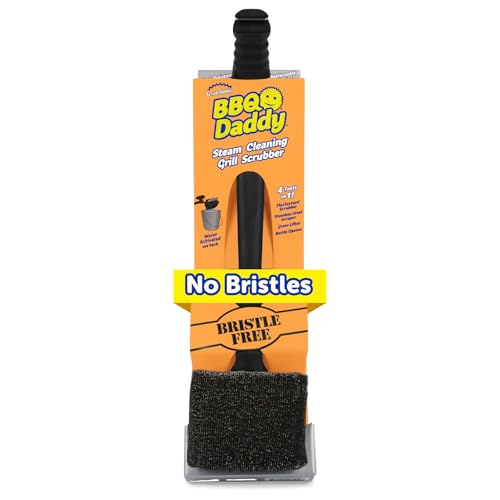
Scrub Daddy BBQ Daddy Grill Brush for Outdoor Grill – Bristle Free Grill Brush with Steel Grill Scraper + Scrub Brush – Temperature Controlled Scrubbing Power for Grill Cleaning (1 Count)
- Steam-Powered Grill Cleaning: Uses steam for effective cleaning
- Bristle-Free Design: Safe, no loose bristles
- Flexible FlexTexture Core: Softens in warm water for deep cleaning
As an affiliate, we earn on qualifying purchases.
As an affiliate, we earn on qualifying purchases.
Conclusion
Remember, proper storage and handling are key to outdoor cooking safety. Imagine grilling chicken outdoors, only to later suffer food poisoning because it wasn’t kept cold enough. To avoid this, always refrigerate raw meats promptly and keep cooked foods hot. By following these simple tips, you’ll enjoy delicious, safe meals outdoors—and prevent mishaps like a backyard barbecue turning into a health hazard. Stay vigilant, and your outdoor cooking adventures will be both fun and safe!

Alpha Grillers Instant Read Meat Thermometer Digital, Cooking, Food, Grill
- Fast Response Time: Reads temperature in 1-2 seconds
- Versatile Use: Suitable for grilling, baking, frying, and more
- Easy-to-Read Display: Bright blue backlight for visibility in any lighting
As an affiliate, we earn on qualifying purchases.
As an affiliate, we earn on qualifying purchases.

Hydrapeak 25oz Stainless Steel Vacuum Insulated Food Jar for Hot Food and Cold Food, Wide Mouth Leak-Proof Soup Jar for Adults, 10 Hours Hot and 16 Hours Cold (Black)
- All-Day Temperature Retention: Keeps food hot for 10 hours, cold for 16 hours
- Premium Stainless Steel: Made of durable 18/8 stainless steel with powder coating
- Leak-Proof Design: Spill-proof and leak-resistant for on-the-go use
As an affiliate, we earn on qualifying purchases.
As an affiliate, we earn on qualifying purchases.