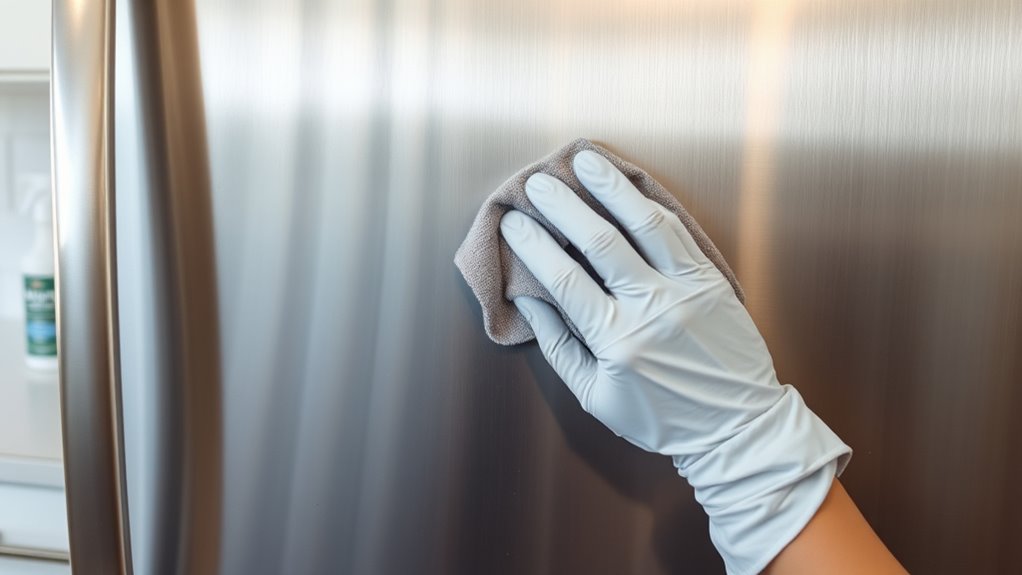
To clean and maintain your stainless steel appliances, use eco-friendly solutions like vinegar, baking soda, or mild dish soap diluted with water. Always wipe in the direction of the grain with soft microfiber cloths to prevent scratches and keep your appliances looking shiny. Regularly wipe away fingerprints and spills, dry thoroughly, and occasionally buff with mineral oil or commercial polish for extra luster. Continue exploring these strategies to keep your appliances pristine and protected.
Key Takeaways
- Use eco-friendly cleaners like vinegar and baking soda, wiping in the direction of the grain for best results.
- Regularly wipe surfaces with soft microfiber cloths to remove fingerprints and prevent buildup.
- Avoid abrasive cleaners and steel wool to prevent scratches and maintain the finish.
- Dry thoroughly after cleaning to prevent water spots and streaks, and buff with mineral oil for added shine.
- Protect surfaces by using felt pads on objects placed on appliances and cleaning tools free of grit.
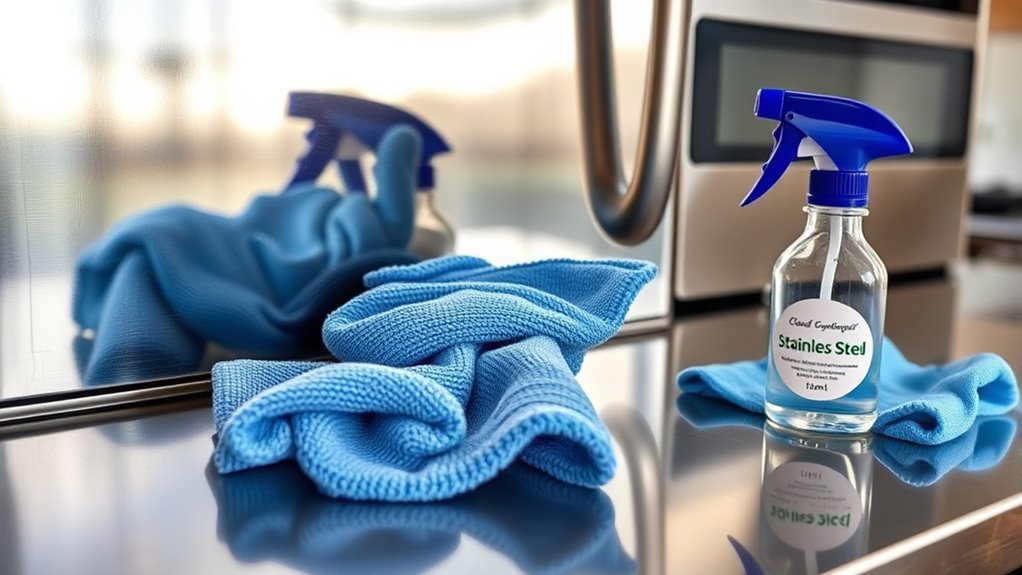
Stainless steel appliances can add a sleek, modern look to your home, but they require regular cleaning and maintenance to keep their shine. When it comes to cleaning, choosing eco-friendly options not only benefits the environment but also helps preserve the surface of your appliances. Using natural cleaning solutions like white vinegar, baking soda, or a mild dish soap diluted with water can effectively remove grime and fingerprints without harsh chemicals. Spray a mixture of equal parts vinegar and water onto the surface, then wipe with a soft microfiber cloth, which is gentle yet effective. Avoid abrasive cleaners or steel wool that can scratch the surface and dull the finish. For stubborn spots, a paste of baking soda and water applied gently with a soft cloth can lift stains without damaging the stainless steel. Incorporating proper cleaning techniques can further enhance the longevity and appearance of your appliances. Scratch prevention is a key aspect of maintaining your appliances’ appearance. To avoid scratches, always use soft cloths or microfiber towels for cleaning and drying. When wiping, follow the grain of the stainless steel rather than scrubbing in circles, which can cause micro-scratches to form. Keep your cleaning tools free of dirt and grit, as these particles can scratch the surface when rubbed across it. Also, consider placing protective pads or felt strips on the bottom of any objects that sit on your appliances, such as cutting boards or utensils, to prevent accidental scratches during daily use. Avoid using metal brushes or abrasive scrubbers, which can permanently damage the finish. Regular maintenance extends the life of your stainless steel appliances and keeps them looking their best. Wipe down the surface after each use to remove fingerprints, smudges, and spills before they set in. When cleaning, always go with the grain to avoid creating new scratches or dull spots. Dry the surface thoroughly with a microfiber cloth to prevent water spots and streaks. If you notice fingerprints or smudges lingering, a quick spritz of eco-friendly glass cleaner or a vinegar solution can help restore the shine. For added luster, you can occasionally buff the surface with a small amount of mineral oil or specialized stainless steel polish, but always test a small area first to guarantee compatibility.
Top picks for "clean maintain stainles"
Open Amazon search results for this keyword.
As an affiliate, we earn on qualifying purchases.
Frequently Asked Questions
Can Baking Soda Damage Stainless Steel Surfaces?
Baking soda risks scratching your stainless steel surfaces if you use it aggressively or with abrasive scrubbing pads. However, when applied gently as a paste or with a soft cloth, it’s safe and effective for cleaning. You should avoid harsh scrubbing to prevent stainless steel scratching. Always rinse thoroughly afterward, and using baking soda properly minimizes the risk of damage and keeps your appliances looking shiny.
Is Vinegar Safe for All Stainless Steel Finishes?
Vinegar safety depends on your stainless steel finishes. Generally, vinegar is safe for most stainless steel surfaces if used in diluted form, as it helps remove grime and fingerprints. However, avoid prolonged exposure or using it undiluted on certain finishes that are more sensitive, like matte or brushed stainless steel. Always test a small, hidden area first to confirm it won’t cause damage, and rinse thoroughly afterward.
How Often Should I Deep Clean Stainless Steel Appliances?
Did you know that cleaning stainless steel appliances once a month can extend their lifespan considerably? You should deep clean your appliances every 4-6 weeks, depending on usage. Regular maintenance tips include wiping down with a soft cloth and mild cleaner, avoiding abrasive materials. Consistent cleaning frequency keeps your appliances looking shiny and new, prevents buildup, and reduces the need for more intensive cleaning later.
What Is the Best Way to Remove Fingerprints?
To remove fingerprints, use a microfiber cloth dampened with a small amount of glass cleaner or a mixture of water and vinegar. Gently wipe the surface in the direction of the grain. For stain prevention tips, regularly wipe your appliances to prevent buildup, and avoid harsh chemicals. This technique keeps fingerprints at bay and maintains your stainless steel’s shine, making your appliances look pristine with minimal effort.
Can I Use Abrasive Scrubbers Without Scratches?
Using abrasive scrubbers on stainless steel appliances is like walking a tightrope — they can easily cause scratched finishes if you’re not careful. You should avoid harsh abrasive cleaners and scrubbers that are too rough. Instead, opt for soft cloths or non-abrasive sponges. This way, you’ll clean effectively without damaging your appliances, keeping their sleek look intact and free of scratches.
Conclusion
By following these simple cleaning tips, your stainless steel appliances will shine brighter than a diamond in the rough. With just a little regular maintenance, you’ll keep them looking brand new and gleaming like a mirror. Think of your appliances as the crown jewels of your kitchen—they deserve nothing less than your best care. So, stay consistent, use the right products, and enjoy the stunning, spotless beauty of your stainless steel for years to come!