Inspecting and repairing gas lines and connections is essential for your safety and system efficiency. Regularly check for signs of leaks like a gas smell, hissing sounds, or corrosion on pipes and fittings. Use specialized tools like gas detectors or soapy water tests to find leaks early. Addressing issues promptly prevents accidents, reduces health risks, and prolongs your system’s lifespan. If you want to guarantee your home’s safety, keep exploring ways to maintain your gas connections properly.
Key Takeaways
- Use specialized gas detectors or soapy water tests to identify leaks in pipes and connections.
- Regularly inspect for corrosion, rust, and damage on metal gas lines to prevent failures.
- Check fittings and connections for looseness or damage, tightening or repairing as needed.
- Promptly address any hissing sounds, gas smells, or visible leaks immediately to ensure safety.
- Schedule professional inspections periodically to maintain system integrity and prevent potential hazards.
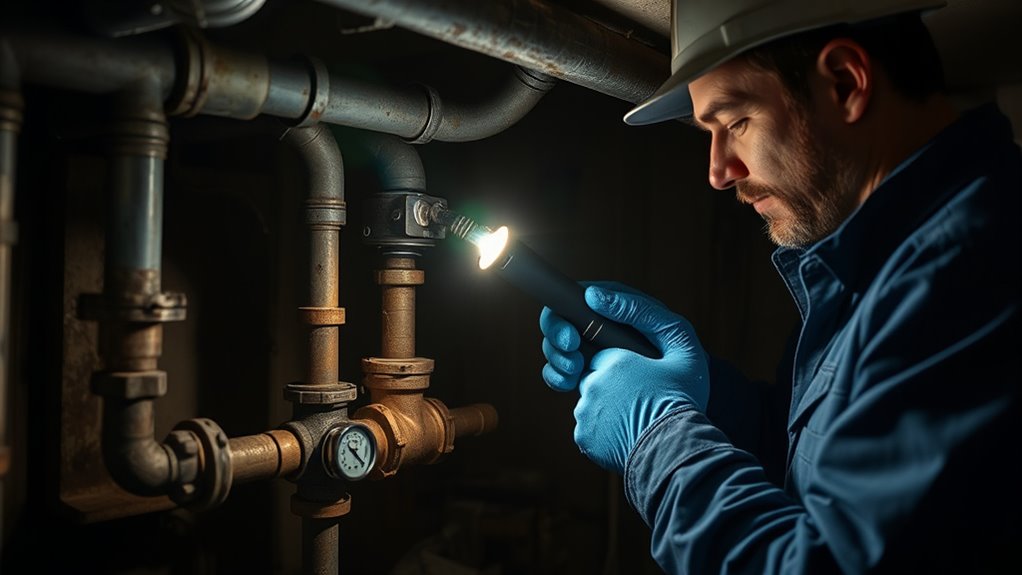
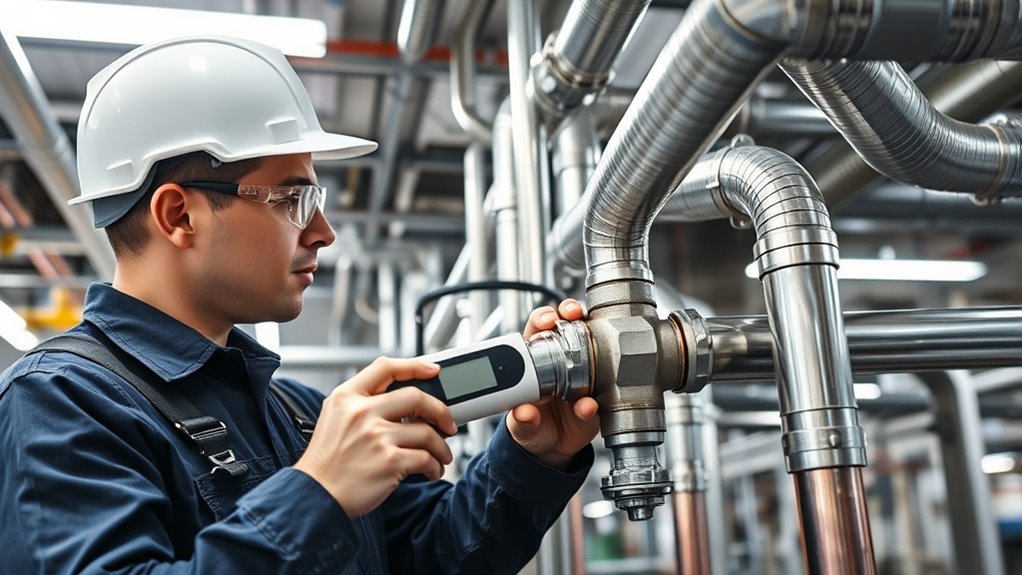
Have you ever wondered how safe your home’s gas system really is? Gas line inspection isn’t just about checking for obvious damages—it’s about ensuring every connection and pipe is functioning properly and safely. One of the most critical aspects of this process involves leak detection. Gas leaks can be silent but deadly, often giving no signs until it’s too late. That’s why regular inspections are essential, especially if you notice a smell of gas or hear a hissing sound near your appliances. Using specialized tools, professionals can detect even the smallest leaks, pinpointing their exact location so repairs can be precise. Leak detection involves more than just sensing odors; it includes electronic sensors, soapy water tests, or gas detectors that alert you to dangerous leaks early on. Early detection can prevent accidents, explosions, or health issues caused by inhaling leaking gas.
Another significant concern during inspections is material corrosion, which can compromise the integrity of your gas lines over time. Pipes made from metal—such as steel or iron—are especially vulnerable to rust and corrosion, particularly if they’re exposed to moisture or other corrosive elements. Corroded pipes may develop weak spots or pinhole leaks that are not immediately visible but can lead to dangerous leaks if left unaddressed. During your inspection, professionals will look for signs of corrosion, such as discoloration, rust flakes, or pitting on the pipe surfaces. If corrosion is detected, repairs might involve replacing sections of the pipe or applying protective coatings to prevent further deterioration. Addressing material corrosion promptly is imperative because it directly impacts the safety and reliability of your entire gas system. Regularly updating inspection techniques can help detect issues early and ensure ongoing safety.
In addition to leak detection and checking for corrosion, your technician will examine all connections, joints, and fittings to make sure they’re secure and intact. Loose or damaged connections can cause leaks or reduce the efficiency of your gas appliances. Over time, vibration, temperature changes, or natural settling of your home can loosen fittings or cause cracks. Regular inspections help catch these issues early before they escalate into more serious problems. Maintenance and timely repairs not only keep your gas system safe but also extend the lifespan of your appliances and piping. Remember, safety isn’t just about preventing immediate hazards; it’s about maintaining peace of mind knowing your home’s gas system is secure and functioning properly. So, don’t neglect routine inspections—your family’s safety depends on it.

PT520A Natural Gas Detector, Gas Leak Detector with 17-Inch Gooseneck, Locating The Source Like Propane, Methane, and Butane for Home and RV (Includes Battery x3) – Orange
- Effective Gas Leak Detection: Detects methane, propane, and more
- Flexible 17-Inch Gooseneck: Access hard-to-reach areas easily
- Fast Response Time: Responds in 0.5 seconds
As an affiliate, we earn on qualifying purchases.
As an affiliate, we earn on qualifying purchases.
Frequently Asked Questions
How Often Should Gas Lines Be Inspected by Professionals?
You should have your gas lines inspected by professionals at least once a year to guarantee safety. Regular gas line maintenance and inspection schedules help detect leaks or corrosion early, preventing potential hazards. If you notice any signs of trouble, like a gas smell or hissing sounds, contact an expert immediately. Staying proactive with these inspections keeps your home safe and ensures your gas system operates efficiently.
Can I Repair Gas Leaks Myself Without Professional Help?
Don’t put all your eggs in one basket—gas leaks are serious. You shouldn’t attempt DIY fixes for gas leaks because safety precautions are vital. Gas leaks can be dangerous and require professional inspection and repair. Instead, if you suspect a leak, turn off the gas supply immediately and call a licensed technician. Your safety is worth more than a quick fix, so leave repairs to the experts.
What Are the Signs of a Hidden Gas Leak?
You might have a hidden gas leak if you notice a rotten egg smell, hissing sounds, or dead vegetation near your property. Gas detection devices can help identify leaks early. Always follow safety precautions—evacuate the area immediately and avoid sparks or flames. If you suspect a leak, don’t attempt repairs yourself; contact professionals to guarantee safe inspection and repair. Your safety depends on quick, proper action.
Are There Different Types of Gas Lines Requiring Specific Repairs?
Yes, different gas lines require specific repairs. You might encounter metal pipes, like steel or copper, which need techniques such as soldering or threading. Flexible hoses or plastic pipes demand different repair methods, like clamps or replacements. Ignoring these differences can lead to dangerous leaks. Always identify the gas pipe material first, then choose appropriate repair techniques to guarantee safety and compliance. Never underestimate the importance of proper repairs.
How Long Does a Typical Gas Line Repair Take?
A typical gas line repair takes anywhere from a few hours to a full day, depending on the extent of the damage. You’ll need the right repair tools and knowledge of various gas line materials, like copper or steel, to guarantee a safe fix. If the repair involves replacing sections or fittings, it might take longer. Always prioritize safety and consider hiring a professional to handle complex repairs.

OMT Turbo Boost Leak Tester 4 Pairs Adapters 1-3/8"-3-1/2" for Cars Trucks
- Troubleshoot Turbo Leaks Easily: Simplifies turbo leak detection for cars and trucks
- Four Sets of Adapters: Multiple sizes for secure hose fitting
- Complete Testing Kit: Includes adapters, gauge, DIN adapter, and gloves
As an affiliate, we earn on qualifying purchases.
As an affiliate, we earn on qualifying purchases.
Conclusion
Regularly inspecting and repairing your gas lines is like tending a garden—you catch issues early before they grow out of control. By staying vigilant, you guarantee your home stays safe and your appliances run smoothly. Don’t wait until a small leak becomes a big problem; act now to keep everything flowing safely. Remember, a proactive approach is your best defense, like a shield protecting your home’s comfort and safety every day.

GentleBliss Nylon Fuel Line Repair Kit & Installation Tool for 1/4" to 3/4"
- Wide Compatibility for Multiple Hose Sizes: As a versatile fuel line…
- Efficient Crimping for Quick Connectors: This an fitting installation tool…
- Specialized Tool for Nylon Fuel Line Repair: This nylon fuel line repair…
As an affiliate, we earn on qualifying purchases.
As an affiliate, we earn on qualifying purchases.
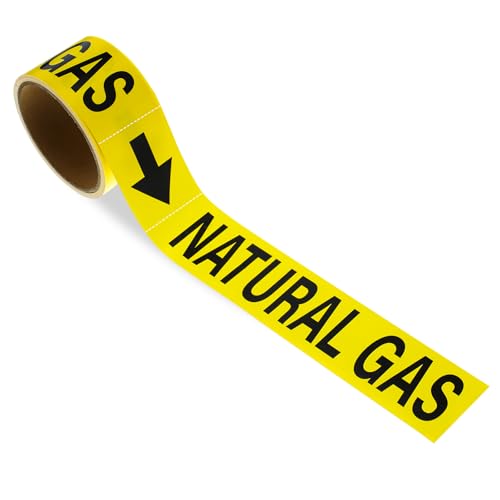
Lerheedi 25 Pcs Natural Gas Pipe Markers 2" x 12" Self Adhesive Safety Stickers Gas Pipe Labels with Directional Arrows for Pipefitter Pipes Lines Inspections Regulators Heaters
- Ideal Pipe Marker Size: measuring 2 inches high by…
- Self Adhesive Application: featuring reliable self-sticking backing, these…
- High Visibility Color Scheme: the bright yellow background with…
As an affiliate, we earn on qualifying purchases.
As an affiliate, we earn on qualifying purchases.