When choosing the right countertop thickness for outdoors, consider the material’s durability, climate, and aesthetic goals. Thicker slabs, such as granite or concrete, offer better resistance to weather, wear, and damage, making them ideal for outdoor use. Thinner surfaces may look sleek but can be prone to cracking or warping if not carefully selected. Balancing strength and style is key—if you want expert tips on optimizing your outdoor space, keep exploring.
Key Takeaways
- Opt for thicker slabs (at least 2-3 inches) for enhanced durability against weather, heavy use, and potential damage.
- Choose materials like granite or concrete with increased thickness to improve resistance to cracking, warping, and environmental exposure.
- Consider the desired aesthetic—thicker countertops convey robustness and tradition, while thinner options offer a sleek, modern look.
- Ensure compliance with local safety and building standards by selecting appropriate thicknesses for outdoor applications.
- Balance durability and style based on climate, usage, and design preferences to determine the optimal thickness for your outdoor countertop.
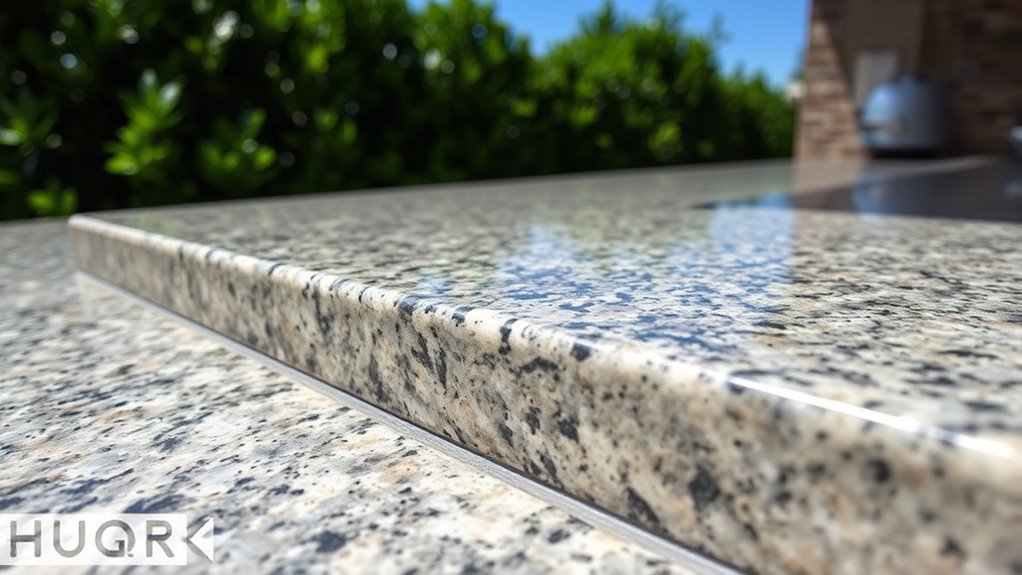
When selecting a countertop for outdoor use, choosing the right thickness is essential to guarantee durability and functionality. The thickness you choose impacts how well the surface withstands weather, wear, and heavy use. Thicker countertops tend to be more durable because they can better resist cracking, warping, and other damage caused by exposure to the elements. If you opt for a thinner surface, it might look sleek and modern, but it could lack the strength needed for outdoor conditions, leading to potential repairs or replacements sooner than expected. Balancing material durability with aesthetic appeal is key when deciding on thickness, ensuring your outdoor space remains both beautiful and long-lasting.
Choosing the right outdoor countertop thickness balances durability and aesthetic appeal for lasting beauty.
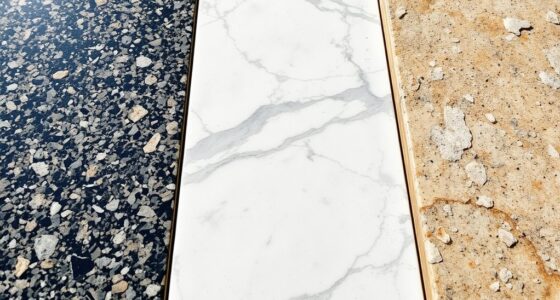
Material durability plays a fundamental role in your decision. For outdoor countertops, materials like granite and concrete are popular because of their natural resilience. Granite, especially when thicker, offers excellent resistance to heat, moisture, and scratches. Thicker slabs provide added strength, reducing the risk of chips or fractures over time. Concrete, on the other hand, benefits from increased thickness, which helps prevent cracking from temperature fluctuations and settling. Thinner concrete surfaces might crack more easily under stress, diminishing both their durability and appearance. In contrast, materials like quartz or laminate, which are less weather-resistant, generally aren’t suited for outdoor use regardless of thickness, but if you do choose them, a thicker profile can offer some extra protection and stability.
Aesthetic appeal is another essential consideration. While thicker countertops often convey a sense of robustness and luxury, they can also give a bold, substantial look that complements outdoor kitchens and patios. Thinner surfaces, when well-designed, can create a sleek, minimalist appeal that harmonizes with modern outdoor aesthetics. It’s important to consider how the thickness influences the overall visual balance of your space. Thicker countertops tend to appear more substantial and grounded, making them ideal for rustic or traditional styles. Conversely, if your outdoor design emphasizes lightness and sophistication, a thinner, more refined profile might be preferable.
Furthermore, understanding the regulatory standards for outdoor materials and thickness can help ensure compliance and safety in your project. By selecting a thickness that aligns with your style goals while ensuring the material’s durability, you create an outdoor area that’s both attractive and resilient. Ultimately, your choice boils down to understanding how material durability and aesthetic appeal intersect. Thicker countertops generally offer enhanced strength and longevity, especially with resilient materials like granite or concrete. Meanwhile, thinner options can provide a sleek look but may require more careful material selection and maintenance. Consider your climate, usage patterns, and design preferences to strike the right balance. This way, you’ll ensure your outdoor countertop not only looks great but also withstands the test of time.
Frequently Asked Questions
How Does Outdoor Temperature Affect Countertop Durability?
Outdoor temperature affects your countertop durability by causing temperature fluctuations that lead to material expansion and contraction. These movements can create cracks or warping over time, especially if the material isn’t designed for such changes. You should choose a durable, weather-resistant material and consider proper installation to accommodate expansion. Regular maintenance helps prevent damage, ensuring your outdoor countertop stays sturdy despite varying temperatures.
Can Thicker Countertops Be More Prone to Cracking Outdoors?
Thicker countertops can actually be more prone to cracking outdoors if they’re made from less flexible materials. While increased thickness might seem stronger, it reduces crack resistance because rigid materials can’t absorb temperature fluctuations or ground shifts easily. If your material lacks flexibility, the added weight and stress from outdoor conditions can cause cracks. Opt for materials designed for outdoor use, balancing thickness with flexibility to prevent damage over time.
What Are the Cost Differences Between Various Thicknesses?
Thicker countertops generally cost more due to increased material and labor expenses, impacting your overall budget. A price comparison shows that 3cm slabs are usually less expensive than 4cm or 6cm options. However, thicker countertops can enhance aesthetic appeal, giving a bolder look. Consider your outdoor space’s style and your budget, balancing the cost differences with the visual impact to choose the best thickness for your needs.
How Does Countertop Thickness Impact Weight and Installation?
Ever wondered how thickness affects weight and installation? Thicker countertops are heavier, making them harder to handle and requiring stronger support, especially for outdoor setups. This impacts material compatibility—some materials can’t support extra weight—while also influencing aesthetic appeal, as thicker slabs create a bold look. You’ll want to balance durability with ease of installation, considering both the weight and how the thickness complements your outdoor space’s style.
Are Certain Materials Better Suited for Specific Outdoor Thicknesses?
Certain materials are better suited for specific outdoor thicknesses due to material compatibility and aesthetic considerations. For example, natural stone like granite works well with thicker slabs for durability, while quartz may require a thinner profile to highlight its sleek look. You should consider how the material’s weight, strength, and appearance align with your outdoor space’s design, ensuring both durability and visual appeal.
Conclusion
Ultimately, selecting the right countertop thickness guarantees durability and safety for your outdoor space. For example, if you’re building a picnic table, opting for a 2-inch thickness can withstand heavy use and weathering. Remember, thicker surfaces tend to last longer and resist damage better. So, consider your specific needs and environment—making the right choice now saves you time, money, and headaches down the road. Choose wisely, and enjoy your outdoor space for years to come.