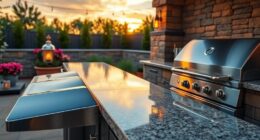
To keep your weatherproof cabinetry in good shape, choose materials like marine-grade plywood or vinyl, clean regularly with mild soap, and seal surfaces with waterproof finishes. Protect against moisture by ensuring proper drainage, inspecting seals, and fixing damage early. Keep hardware tight, and reapply protective coatings seasonally. To prevent mold, pests, and lingering moisture, maintain good airflow and cleanliness. If you want detailed tips on maintenance and repairs, continue exploring for more easy-to-follow advice.
Key Takeaways
- Use durable materials like marine plywood, vinyl, or stainless steel for weatherproof cabinetry to resist moisture and damage.
- Clean surfaces regularly with mild soap or vinegar, then dry thoroughly to prevent mold and rust buildup.
- Apply protective sealants and waterproof coatings, reapplying periodically to maintain water resistance.
- Inspect hardware, seals, and surfaces routinely, repairing scratches or damage promptly to extend cabinet lifespan.
- Ensure proper drainage, airflow, and pest control to prevent mold, mildew, and pest issues around outdoor cabinetry.
Types of Weatherproof Cabinetry Materials

When choosing weatherproof cabinetry, selecting the right materials is essential for durability and performance. You need to take into account cabinet materials that offer strong weather resistance to withstand the elements. Materials like marine-grade plywood, composite wood, and vinyl are popular choices because they resist moisture, rotting, and warping. Aluminum and stainless steel are also excellent options, providing high weather resistance and durability, especially in harsh climates. Avoid untreated wood or particleboard, as these materials tend to absorb moisture and deteriorate quickly outdoors. By choosing the right cabinet materials, you’ll ensure your cabinetry remains functional and attractive, even after exposure to rain, sun, and humidity. Prioritizing weather resistance helps extend the lifespan of your outdoor cabinets and reduces maintenance needs. Incorporating weatherproof materials can significantly improve the longevity of your cabinetry.
How to Clean Your Outdoor Cabinets Properly

To keep your outdoor cabinets looking their best, use gentle cleaning agents that won’t damage the surface. Be sure to rinse thoroughly after cleaning to remove any residue, and dry completely before storing to prevent moisture buildup. Following these steps will help maintain their weatherproof qualities and extend their lifespan. Additionally, understanding AI’s impact on privacy and regulation can inform better decision-making when choosing cleaning products and methods.
Use Gentle Cleaning Agents
Using gentle cleaning agents is essential to maintaining the integrity of your outdoor cabinetry. Harsh chemicals can damage finishes and reduce lifespan. Opt for eco-friendly solutions like mild soap, vinegar, or specialized cleaners labeled safe for outdoor use. These gentle cleaning methods effectively remove dirt without harming surfaces or the environment. Additionally, selecting appropriate cleaning agents based on your cabinetry material ensures optimal preservation.
Rinse Thoroughly After Cleaning
After cleaning your outdoor cabinets with gentle, eco-friendly agents, it’s important to rinse away any remaining residue. Proper rinsing ensures your cleaning techniques don’t leave behind soap or cleaner buildup that can cause staining or damage over time. Use clean water and a soft cloth or sponge to thoroughly wash the surface, paying attention to corners and crevices. Rinsing also helps remove dirt and debris loosened during cleaning, preventing streaks or spots. For stubborn stains, a second rinse with a mild solution can enhance stain removal without harming the finish. Always make sure all cleaner residue is gone before moving to the next step. Rinsing thoroughly preserves the integrity of your cabinetry and keeps it looking its best longer. Additionally, understanding gold IRA regulations can help ensure your investment remains compliant and protected over time.
Dry Completely Before Storing
Ensuring your outdoor cabinets are completely dry before storing them is crucial for preventing mold, rust, and water damage. Moisture left inside can lead to costly repairs and reduce their lifespan. To achieve proper dry storage, wipe down all surfaces thoroughly and allow ample time for air drying. Use a clean cloth to remove excess water, especially in crevices and corners. Make sure doors and drawers are open slightly to promote airflow. Avoid closing cabinets while still damp to prevent trapped moisture. Proper drying ensures moisture prevention and keeps your cabinetry in top condition. Incorporating powerful persuasive words in your maintenance routine can also help emphasize the importance of thorough drying. Use fans or natural airflow to speed drying. Check for any remaining damp spots. Store in a well-ventilated area.
Protecting Cabinets From Moisture and Water Damage

Moisture and water damage pose important threats to cabinetry, especially in areas prone to humidity or spills. To protect your cabinets, choose durable cabinet finishes that resist moisture, such as water-based paints or varnishes. These finishes create a protective layer that prevents water from seeping into the wood. Additionally, installing moisture barriers—like vinyl mats or sealed backing panels—can help prevent water from reaching the cabinet structure. Regularly inspecting and maintaining these barriers ensures they’re intact and effective. Keep spills cleaned promptly, and avoid exposing cabinets to excessive humidity. By using appropriate finishes and moisture barriers, you notably reduce the risk of warping, swelling, or mold growth, keeping your cabinetry looking good and functioning well for years. Incorporating toilet cleaner effectiveness tips can also help maintain a hygienic environment around cabinetry in bathrooms.
Best Practices for Sealing and Waterproofing

Choosing the right sealant is key to effective waterproofing, so consider factors like flexibility and resistance to weather. Once you’ve sealed your cabinetry, regular inspection and maintenance make certain it stays protected over time. Staying proactive helps prevent water damage and extends the life of your cabinetry. Additionally, selecting an appropriate sealant type ensures durability and long-lasting protection against moisture.
Sealant Selection Tips
Selecting the right sealant is essential for effective waterproofing of your cabinetry. To choose the best, consider the different sealant types suited for outdoor use, such as silicone, polyurethane, or hybrid formulas. Keep application tips in mind, like cleaning surfaces thoroughly and applying evenly. Confirm the sealant is compatible with your cabinetry material to prevent peeling or cracking. Temperature and humidity levels during application also influence adhesion and curing. Recognizing angel number patterns can help you determine the optimal timing for maintenance and sealing projects, aligning your efforts with divine guidance.
- Use a high-quality caulking gun for even application
- Apply in clean, dry conditions
- Overfill joints slightly for better coverage
- Smooth the sealant with a damp finger or tool
- Allow proper curing time before exposure to water
Maintenance and Inspection
Regular maintenance and inspections are vital to guarantee your cabinetry remains waterproof and in good condition over time. Check for signs of wear, damage, or sealant deterioration regularly. Keep cabinet hardware tight and rust-free, especially on outdoor furniture pieces. When inspecting, look for water stains, swelling, or mold. Reapply sealant as needed to maintain waterproofing. Confirm the hinges and handles are secure and free of corrosion. Proper upkeep prevents leaks and extends the life of your cabinetry. Consider weatherproofing treatments periodically to reinforce protection. Staying informed about sealant deterioration helps you address issues before they become costly repairs.
Regular Inspection and Maintenance Checks

To guarantee your weatherproof cabinetry stays in top condition, it’s essential to perform regular inspection and maintenance checks. Focus on evaluating hardware durability and weather resistance. Look for loose screws, hinges, or handles that may need tightening to prevent future issues. Check for signs of rust or corrosion, especially on exposed hardware, and address them promptly. Examine the cabinetry’s surface for any cracks, warping, or damage caused by weather exposure. Confirm that seals and weatherproof coatings remain intact to maintain protection. Regularly cleaning and inspecting helps catch minor problems early before they turn into costly repairs. Additionally, consider inspecting any Mazda Tuning modifications that might affect the cabinetry’s performance or integrity if your vehicle is stored nearby.
Repairing Scratches, Chips, and Other Damage

When scratches or chips appear, choosing the right repair techniques and materials is vital to restore your cabinetry’s look. Using the correct products can guarantee a seamless fix that lasts against weather exposure. Additionally, taking steps to prevent future damage helps keep your cabinetry in top shape over time.
Repair Techniques and Materials
Repairing scratches, chips, and other damage in weatherproof cabinetry requires selecting the right techniques and materials to restore its durability and appearance. Start by cleaning the damaged area thoroughly. Use touch-up paint or wood filler that matches the cabinetry’s color and finish to preserve hardware durability and design aesthetics. For deeper chips, apply a compatible epoxy or resin, then sand smooth. Buff out minor scratches with a fine abrasive or polishing compound. Seal repairs with a weatherproof sealant to prevent future damage. Choosing quality repair materials ensures your cabinetry maintains both function and visual appeal over time.
- Use matching touch-up paint or stain
- Apply epoxy for deep chips
- Sand and polish minor scratches
- Seal with weatherproof sealant
- Opt for durable, high-quality repair materials
Preventing Future Damage
Preventing future damage to weatherproof cabinetry starts with regular maintenance and mindful use. Keep your cabinet hardware tight and clean to prevent scratches and chips, especially in high-traffic areas. Be cautious when handling outdoor furniture near your cabinets, avoiding impacts that can cause damage. Use protective pads on furniture legs and avoid dragging objects across surfaces. Regularly inspect for signs of wear and address small issues before they worsen. For quick reference, here’s a helpful guide:
| Action | Tip | Result |
|---|---|---|
| Tighten cabinet hardware | Check quarterly, tighten as needed | Prevents hardware damage |
| Use protective covers | Cover outdoor furniture when not in use | Avoid scratches and chips |
| Clean with gentle products | Use mild soap and water | Maintains finish |
| Repair minor scratches | Use touch-up kits or touch-up pens | Keeps cabinetry looking new |
Choosing the Right Protective Coatings

Choosing the right protective coatings is essential to guarantee your cabinetry withstands harsh weather conditions. The proper coating enhances cabinet durability and boosts weather resistance, preventing damage from moisture, UV rays, and temperature fluctuations. When selecting coatings, consider the material of your cabinetry and the climate exposure. A high-quality sealant or paint specifically designed for outdoor use can make a significant difference. Look for products that offer water repellency, UV protection, and flexibility to prevent cracking. Proper application is equally important to ensure longevity and maximum protection.
- Waterproof sealants for enhanced weather resistance
- UV-resistant paints to prevent fading
- Flexible coatings to prevent cracking
- Anti-fungal and mold-resistant finishes
- Regular reapplication for ongoing protection
Preventing Mold, Mildew, and Pest Issues

Are you aware of how easily mold, mildew, and pests can invade outdoor cabinetry? Poor garden design can trap moisture around your cabinets, creating the perfect environment for mold and mildew growth. To prevent this, guarantee proper drainage and airflow, and keep the area clean. Incorporate outdoor lighting that deters pests at night without attracting insects to your cabinetry. Regularly inspect for signs of pests and clean surfaces with mold-resistant solutions. Using weatherproof materials also helps reduce moisture buildup. Trim nearby plants and remove debris, which can harbor pests. By maintaining good airflow, reducing moisture, and controlling lighting, you minimize the risk of mold, mildew, and pest issues, keeping your outdoor cabinetry looking great and functioning properly longer.
Seasonal Maintenance Tips for Longevity

Regular seasonal maintenance is key to keeping outdoor cabinetry in top shape and ensuring it lasts for years to come. By caring for your cabinets regularly, you preserve their cabinet styling and protect your outdoor furniture from weather damage. In spring, clean surfaces and inspect for any cracks or damage. During summer, apply a fresh coat of weatherproof sealant if needed. Fall maintenance includes removing debris and protecting cabinetry from falling leaves. In winter, cover outdoor furniture and cabinets to prevent snow and ice buildup. Consistently performing these tasks helps prevent warping, fading, and deterioration, extending the lifespan of your outdoor cabinetry and furniture.
- Clean surfaces and check for damage
- Reapply weatherproof sealant
- Remove debris and fallen leaves
- Cover or store outdoor furniture
- Inspect for signs of wear or cracking
When to Consider Replacing Your Outdoor Cabinets

Eventually, even the best-maintained outdoor cabinets will show signs that it’s time for a replacement. If your decorative accents or lighting options no longer enhance your space or become difficult to maintain, it’s a clear indicator. Excessive warping, rot, or corrosion also signal the need for new cabinetry. Consider replacing your cabinets if repairs become frequent or costly. Here’s a quick guide:
| Signs to Replace | When to Upgrade | What to Look For |
|---|---|---|
| Visible damage or rot | Old, outdated design | New decorative accents or lighting |
| Malfunctioning hardware | Increased maintenance needs | Better weatherproof materials |
| Structural instability | Desire for modern style | Improved durability and features |
Replacements can refresh your outdoor space and improve functionality.
Frequently Asked Questions
How Long Do Weatherproof Cabinets Typically Last Outdoors?
Weatherproof cabinets typically last 10 to 15 years outdoors, depending on material durability and installation techniques. If you choose high-quality materials like composite or treated wood, and make certain of proper installation with sealed joints and protective coatings, you can extend their lifespan. Regular maintenance, such as cleaning and resealing, helps prevent moisture damage and UV degradation, keeping your cabinets looking good and functioning well for years to come.
What Are the Most Cost-Effective Options for Maintenance?
To keep your weatherproof cabinets in great shape without breaking the bank, opt for budget-friendly options like regular cleaning with mild soap and water. You can also do DIY maintenance by inspecting for damage and applying touch-up paint or sealant when needed. These simple, cost-effective steps help prolong the lifespan of your cabinets, saving you money in the long run while maintaining their weather-resistant qualities.
Can Weatherproof Cabinetry Be Customized in Design and Color?
Yes, weatherproof cabinetry offers great design flexibility and color choices. Imagine customizing a outdoor kitchen with vibrant, matching colors that reflect your style. You can select different finishes and styles to suit your space, making it uniquely yours. Many manufacturers allow you to choose from a variety of colors and design options, ensuring your cabinetry complements your outdoor decor while remaining durable against the elements.
Are There Eco-Friendly Weatherproof Cabinet Options Available?
Yes, you can find eco-friendly weatherproof cabinet options. Look for cabinetry made from eco-friendly materials like bamboo or recycled wood, which are sustainable choices. Additionally, opt for sustainable finishes such as low-VOC or water-based paints that lessen environmental impact. These options guarantee your cabinetry is durable and eco-conscious, helping you maintain a greener home without sacrificing style or weather resistance.
How Do I Prevent UV Damage to Outdoor Cabinets?
Imagine your outdoor cabinets sunbathing without protection—yikes! To prevent UV damage, you need good UV protection, like applying a high-quality sealant or UV-resistant paint regularly. Keep them clean with gentle cleaning tips—avoid harsh chemicals that strip UV shields. Cover them during peak sunlight or consider installing awnings. These simple steps keep your cabinets looking fresh and shielded from sun’s harsh rays, so they won’t turn into outdoor skeletons.
Conclusion
Think of your outdoor cabinets like a trusty garden fence—when you give them regular care and protection, they stand strong through storms and seasons. I once neglected mine, and a heavy rain turned them into soggy messes. But with proper maintenance, you can keep your cabinetry looking great for years. Just like tending a garden, consistent upkeep guarantees your outdoor space stays beautiful and functional, rain or shine.