TL;DR

Get garden gear delivered free with Prime
- Fast, free delivery on millions of items
- Prime Video, Amazon Music and more included
- Member-only deals all year
A Grow Organic guide explains that sphagnum peat moss can help retain moisture in container mixes and seed trays, but it provides few nutrients and is usually acidic. The report advises gardeners to test soil, use peat for a defined purpose and consider alternatives because harvesting disturbs peatlands that store carbon and support habitat.
Grow Organic’s guide to sphagnum peat moss explains how home gardeners can use the material to retain moisture in seed-starting and container mixes, while warning that it is not a complete fertilizer or a universal soil fix. The report also outlines peat’s acidity and the environmental costs associated with harvesting peatlands.
Peat forms as plant remains accumulate in waterlogged places with little oxygen, where decay is slow; deposits can develop over thousands of years. Commercial garden peat is commonly made from partly decayed sphagnum plants and sold dried, often in compressed bales. Once loosened and mixed, it can help sandy soils or container blends hold water. With coarser ingredients, it can contribute to a balance of moisture and air space, but a mix that stays soggy can still deprive roots of oxygen.
The guide distinguishes sphagnum peat moss from sphagnum moss sold as living plants or long, intact fibers. Those materials are not automatically interchangeable: dried fibers are used in some orchid mixes and propagation projects, while peat is commonly blended into growing media. Peat can hold some nutrient ions, but that storage function does not make it a sufficient source of plant nutrients; gardeners still need a feeding plan suited to their plants.
Unamended sphagnum peat is acidic, often around pH 3.8–4.5, according to the report. A finished potting mix may contain lime, and its final pH depends on the ingredients, the amount of peat, the starting soil and irrigation water. The guide advises testing soil and following local recommendations rather than using peat as a precise treatment for alkaline soil.
Choosing Peat for the Right Job
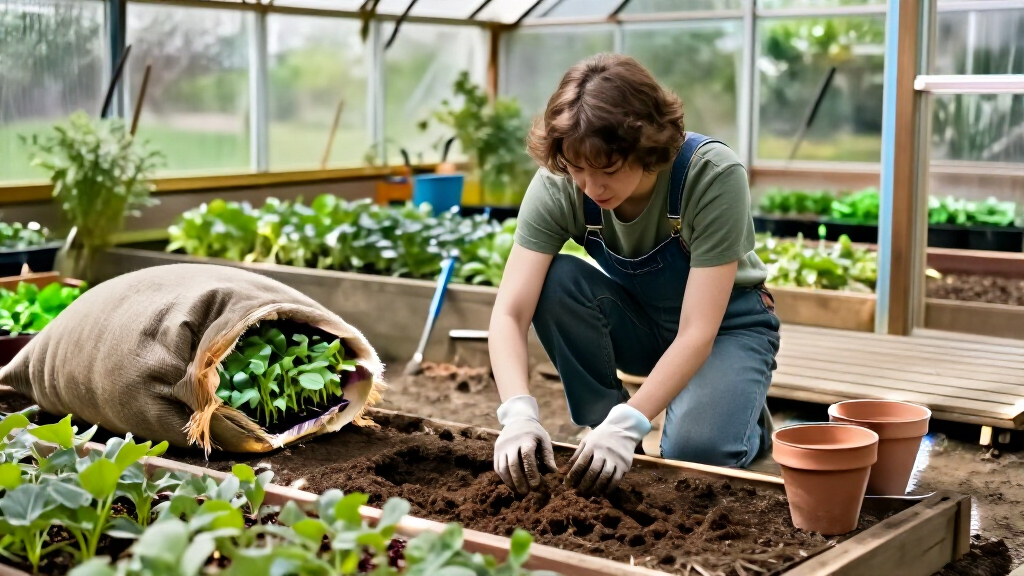
The practical issue for gardeners is whether peat solves a specific growing problem without creating another. Adding it to a mix may increase water retention, but extra peat can leave a container too wet, alter acidity or make a dry mix harder to rewet. The guide recommends checking the finished blend before using it broadly: moisten dry peat gradually, mix it with suitable ingredients, then fill and water one pot to assess wetting and drainage.
The choice also has an environmental dimension. Peatlands store carbon and support specialized habitats, and harvesting disturbs these ecosystems. Because peat forms too slowly to be considered renewable on a human timescale, the report encourages gardeners to compare materials such as coconut coir, mature compost, composted bark and wood fiber. It cautions that alternatives also have tradeoffs, including quality, salts, processing and transport.
For beds, the guide says there is no universal application rate: a container recipe should not be copied directly into garden soil, whose texture and drainage differ. Mature compost may be more useful for improving ordinary beds. Neither compost nor peat can by itself correct poor grading, standing water or compacted subsoil.
As an affiliate, we earn on qualifying purchases.
Peat, Compost and Moss Fibers
Peat and compost are both organic materials, but they form differently and have different physical properties and nutrient levels. Compost results from managed decomposition of materials such as leaves and plant scraps. Peat accumulates slowly in wet, low-oxygen settings. That difference helps explain why peat is used mainly to adjust moisture and growing-media structure, rather than as a ready source of plant food.
Product labels matter. Some packaged potting mixes already contain peat, so adding more can change moisture retention, aeration and pH. Gardeners should also distinguish loose peat from long-fiber sphagnum moss and follow package directions for products such as hydrated peat pellets. The guide notes that packaged peat often has few weed seeds, but says not to assume every product is sterile; clean tools and containers help reduce contamination risks.
“There is no universal amount.”
— Grow Organic guide
As an affiliate, we earn on qualifying purchases.
Questions Before Adding Peat
The supplied report does not give a single peat-to-soil ratio, and it does not identify one blend that suits every crop. Suitable proportions depend on the existing soil or mix, plant needs, drainage and watering; the source recommends testing rather than assuming a standard dose. It also provides no product-specific assessment of peat extraction practices or a comparative environmental ranking for peat and its alternatives.
The final pH and moisture behavior of any blend remain dependent on its ingredients and conditions. Gardeners should check product labels, test soil where relevant, and trial a small batch before preparing a larger quantity. The report does not claim that every peat product is sterile or that every alternative is suitable for every plant.
peat moss alternative for gardening
As an affiliate, we earn on qualifying purchases.
As an affiliate, we earn on qualifying purchases.
Test a Small Batch First
Before changing a bed or filling multiple containers, gardeners can identify the problem they want to address—such as rapid drying or poor drainage—and choose a material accordingly. For peat-based mixes, the guide recommends dampening dry peat gradually, breaking up clumps and combining it with ingredients that provide suitable air space. It also advises testing one pot for even wetting and how quickly excess water drains.
For garden beds, the next step is to check soil conditions and local recommendations rather than applying a container formula. Gardeners comparing peat with coir, compost, bark or wood fiber should match the material to the crop and account for its practical and environmental tradeoffs. Any feeding plan should be considered separately because peat alone does not supply adequate nutrition.
As an affiliate, we earn on qualifying purchases.
Key Questions
What does peat moss do in a garden mix?
It helps retain moisture in sandy soils and container blends, and can be combined with coarse ingredients to balance moisture and air space. It is not a complete plant food or a cure for drainage problems.
Is peat moss the same as sphagnum moss?
No. Sphagnum peat is partly decayed plant material, while sphagnum moss may be sold as living moss or long, intact fibers. Their uses and behavior differ, so check the product label.
How much peat moss should I add?
The guide gives no universal amount. The suitable quantity depends on the existing soil or container recipe and the plants’ moisture and pH needs. Test a small blend before using it widely.
What are the drawbacks of peat moss?
It is usually acidic, provides few nutrients, and can be difficult to rewet evenly after drying. Harvesting also disturbs peatlands, which store carbon and support specialized habitats.
What can gardeners use instead of peat?
Possible alternatives include coconut coir, mature compost, composted bark and wood fiber. Their suitability and impacts vary, so choose based on the crop and growing conditions rather than assuming one material works for all uses.
Source: rss
Fall Picks
fall essentials
As an affiliate, we earn on qualifying purchases.