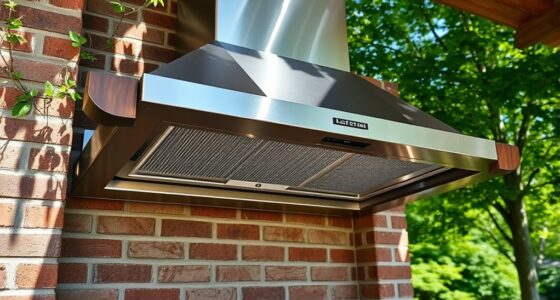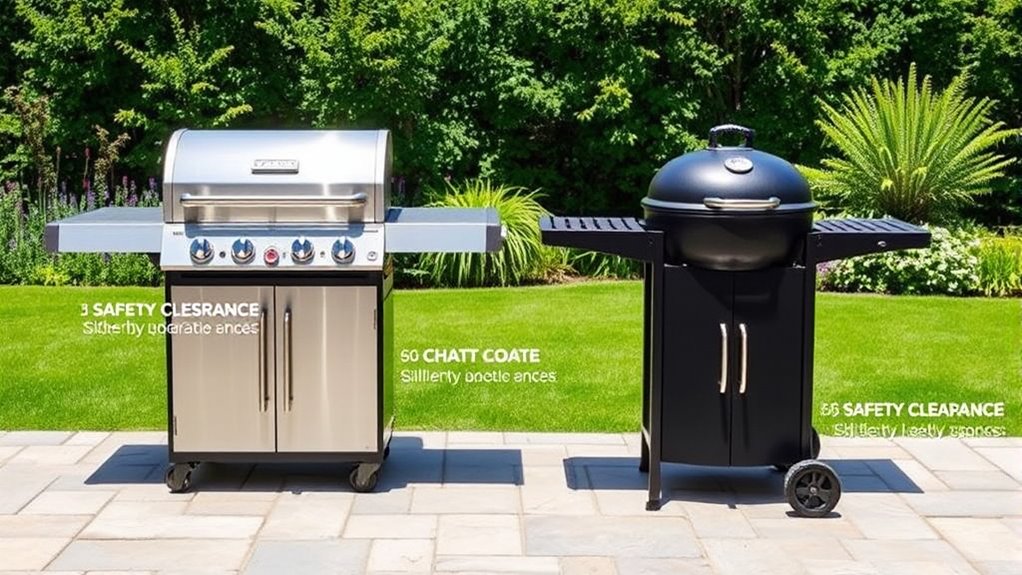

To stay safe, you should keep your gas or charcoal grill at least 10 to 24 inches away from walls, overhangs, and other structures. This clearance helps prevent heat buildup, enables proper venting, and reduces fire risks. Always follow your grill manufacturer’s recommendations and check local codes for specific requirements. Maintaining appropriate space guarantees safe operation and better performance. For more detailed guidelines and tips, keep exploring the key considerations outlined below.
Key Takeaways
- Maintain 10 to 24 inches of clearance between the grill and nearby structures for safety and proper ventilation.
- Follow manufacturer’s guidelines and local codes for specific clearance requirements.
- Place grills away from walls, overhangs, and combustible materials to prevent heat buildup and fire hazards.
- Ensure sufficient overhead space to avoid trapping heat and smoke during operation and maintenance.
- Regularly inspect the area for debris and check clearances, especially when installing built-in or custom grills.
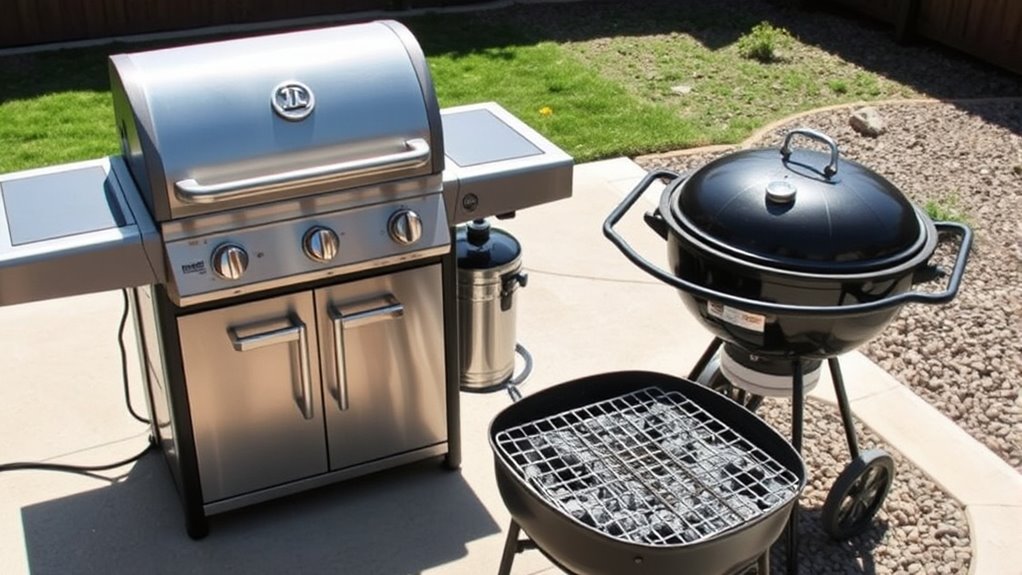
Whether you’re setting up a new grill or relocating an existing one, understanding clearance requirements is essential for safety and compliance. Proper clearance ensures your grill operates safely, reduces fire hazards, and helps you follow local codes and manufacturer instructions. When considering installation safety, it’s crucial to give your grill enough space from walls, overhangs, deck railings, and other combustible materials. Typically, gas and charcoal grills should be placed at least 10 to 24 inches away from structures, depending on the model and local regulations. This distance prevents heat buildup and allows for safe venting of gases. Ignoring these clearances can lead to dangerous situations, including fire risks or gas leaks.
Maintain at least 10 to 24 inches clearance around your grill for safety and proper venting.
In addition to site selection, you should familiarize yourself with the maintenance guidelines that accompany your grill. Regular inspections help you identify any potential hazards like cracked hoses, rusted parts, or grease buildup. When performing maintenance, ensure the grill is turned off, cooled down, and disconnected if necessary. Keeping the area around your grill clear of combustible debris, leaves, and flammable liquids is vital for ongoing safety. Also, check that there’s enough clearance above the grill, especially if it has a lid or hood. An inadequate overhead space can trap heat or smoke, increasing the risk of fire and affecting the grill’s performance.
Installing your grill correctly involves following the manufacturer’s instructions carefully. Adhere to recommended clearances specified in the user manual to avoid voiding warranties or violating safety standards. If you’re installing a built-in or custom setup, consult local codes and possibly an expert to ensure compliance. Remember that outdoor conditions can change—wind, rain, or snow—and these factors may influence the required clearances or protective barriers you need to install to keep your setup safe year-round.
Maintaining safe distances isn’t just about avoiding fires; it’s also about ensuring proper ventilation. Proper airflow prevents gas buildup in the case of propane or natural gas grills and helps dissipate heat efficiently. Keeping the grill away from low-hanging branches, overhanging roofs, or awnings is crucial. It’s always better to err on the side of caution and give your grill more space than the minimum requirements. Doing so not only improves safety but makes grilling more enjoyable, knowing you’ve minimized risks through proper installation safety practices and diligent maintenance.
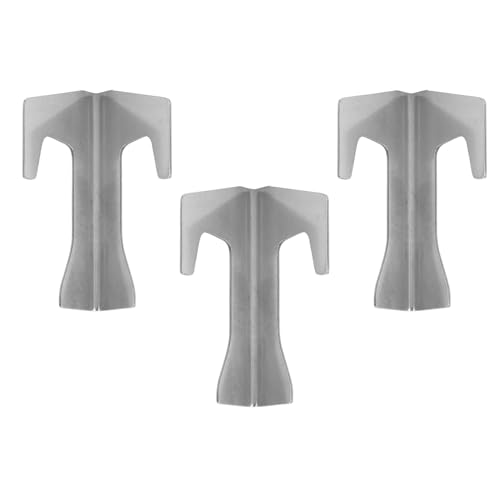
TOPINCN 3 Pcs Universal Barbecue Plate Spacer, Grill Heat Plate Shieldes Flame Tamer Replacement for Gas Grill, Stainless Steel BBQ Pan Gasket Holder Grill Mat Support Stand
[Compatible Design] Compatible with plancha grill plate, kettle charcoal grill, compact kettle, and smoke accessories.
As an affiliate, we earn on qualifying purchases.
As an affiliate, we earn on qualifying purchases.
Frequently Asked Questions
Are Clearance Requirements the Same for Indoor and Outdoor Grills?
No, clearance requirements differ for indoor and outdoor grills. For fire safety and ventilation guidelines, indoor grills need more space from walls and combustible materials to prevent fires, while outdoor grills typically require less clearance. Always follow the manufacturer’s instructions and local codes. Proper ventilation is essential indoors to avoid dangerous smoke buildup, whereas outdoor grills are designed to operate safely with open-air ventilation.
How Do Clearance Rules Differ for Built-In Versus Portable Grills?
You might think built-in grills have the same clearance rules as portable ones, but surprisingly, they don’t. Built-in models demand strict adherence to installation guidelines and larger safety zones because they’re permanently installed and pose greater safety risks. Portable grills, on the other hand, require less clearance, making them more flexible. Always follow manufacturer instructions and local codes to guarantee safety, whether you’re installing a built-in or using a portable grill.
Do Clearance Standards Vary by Region or Country?
Yes, clearance standards do differ by region or country due to regional variations and different international standards. You should verify local building codes and regulations, as they often set specific clearance distances for grills to ensure safety. International standards like those from UL or CE can also influence requirements, but always prioritize regional guidelines to comply with local safety and fire prevention rules.
Are There Specific Clearance Requirements for Propane Versus Natural Gas Grills?
Think of your grill setup as a dance; propane and natural gas grills have distinct moves. Propane grills often need a dedicated gas line, with clear ventilation requirements to prevent buildup. Natural gas grills generally connect directly to a continuous gas supply, so the clearance standards focus on safe distances from combustible materials. Always check local codes to make certain your grill’s choreography is safe and compliant.
What Are the Penalties for Not Adhering to Clearance Requirements?
If you don’t follow clearance requirements, you risk fire safety hazards, increasing the chance of accidents or property damage. Penalties can include fines, legal liabilities, or loss of insurance coverage. Ignoring these guidelines may also void your insurance policy, leaving you financially responsible if a fire occurs. To protect yourself and your property, always adhere to clearance rules and consult local codes before installing or using your grill.

Gas One – 14-inch Portable Barbecue Grill with 3-Point Locking Lid for Heat Preservation – Dual Venting System – Small Charcoal Grill for Backyard, Camping, Boat
Superior Construction – The Gas On barbecue grill charcoal features a 14-inch / 150-square inch cooking surface which…
As an affiliate, we earn on qualifying purchases.
As an affiliate, we earn on qualifying purchases.
Conclusion
Remember, your grill is like a trusted friend—standing close might seem cozy, but safety keeps it loyal. By respecting clearance rules, you’re planting seeds of protection that grow into a safe, joyful backyard. Think of the empty space around your grill as a protective shield, keeping sparks and smoke at bay, so your outdoor moments remain warm and worry-free. Follow these guidelines, and your grilling adventures will always shine bright—like a well-tended flame.

FOROIRON 2 Pack Stainless Steel Venting Panel for Grill Accessory Stainless Steel Vent Cover Grill Vent for Masonry Fire Pits and Outdoor Kitchen, 15" by 4-1/2"
Function: FOROIRON stainless steel venting panel design for a cleaner more efficient flame. Easy to Install, Suitable for…
As an affiliate, we earn on qualifying purchases.
As an affiliate, we earn on qualifying purchases.

Charbroil Medallion Series Built-in Grill LP Conversion Kit – 2429018W06
SP Conversion Kit converts the Char-Broil Medallion Built-in 4 Burner, 5 Burner and Side Burner units from Natural…
As an affiliate, we earn on qualifying purchases.
As an affiliate, we earn on qualifying purchases.