This checklist is for gardeners planning a home irrigation setup for vegetables, flower beds, containers, or other outdoor growing areas. It covers water delivery and storage, with advice for matching each option to your layout and routine.

Get garden gear delivered free with Prime
- Fast, free delivery on millions of items
- Prime Video, Amazon Music and more included
- Member-only deals all year
The sections move from targeted watering and water collection to hose-based tools. Some slots name a specific pick; the garden hose timer and soaker hose sections offer selection advice without naming a product.
Before shopping, note your water source, bed dimensions, hose connections, and any downspout measurements. Use the look-for lists to check fit and compatibility, then prioritize the items that solve your most immediate watering needs.
Drip Irrigation Kit
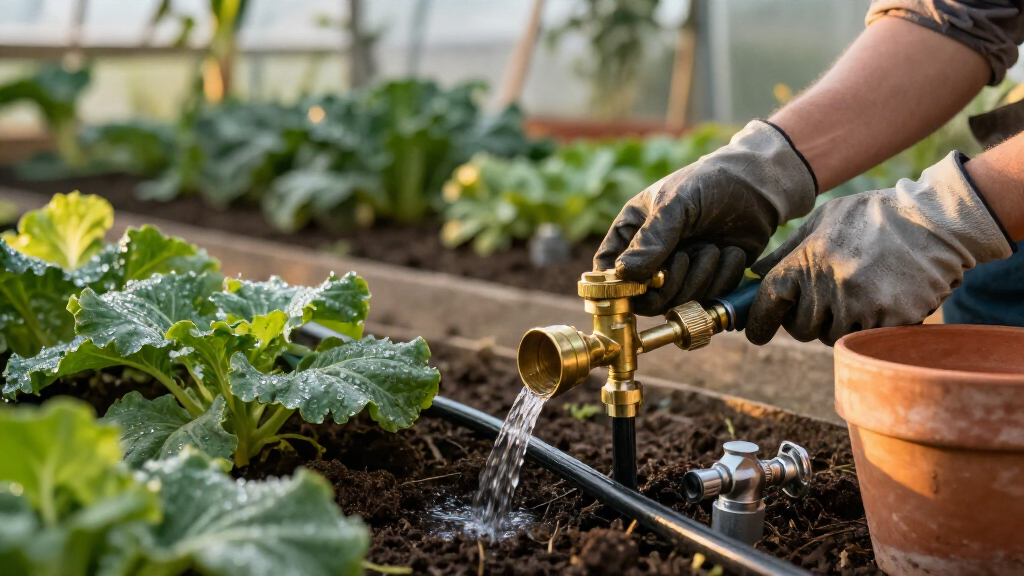
A drip kit can help direct water to plants in a vegetable garden, making it a useful slot to consider when beds have regular rows or defined planting areas. The listed pick is the Drip Depot Drip Irrigation Kit for Vegetable Gardens, Standard. Before choosing any kit, map where plants sit and how the water source reaches them. A layout sketch can reveal whether tubing needs to travel around paths, raised beds, or other obstacles.
A common buying mistake is assuming that a kit will fit every garden simply because it is intended for vegetable gardens. Check what components are included and whether the supplied lengths and connectors suit your layout. Confirm the connection type at your water source, and consider how you will extend or adapt the system if beds change. Avoid planning around unverified details: compare the product listing with your own measurements before purchase.
Think about access for planting, weeding, and seasonal maintenance as well as coverage. Keep tubing routes reachable, and check that emitters can be placed where your plants actually grow. The best fit is a kit whose included parts and connection requirements align with your garden plan.
What to look for:
- Measure bed rows and the route from the water source.
- Check the kit’s included tubing, connectors, and emitters.
- Match the connection requirements to your water source.
- Plan emitter placement around actual planting locations.
- Leave access for weeding and seasonal adjustments.
Drip Depot Drip Irrigation Kit for Vegetable Gardens, Standard

This drip irrigation kit waters vegetable gardens using 1/4-inch dripline for rows and individual emitters for spot watering. It includes a 1/2-inch poly tubing mainline, a 25 PSI pressure regulator, a filter, and fittings for a configurable layout; the Standard kit is rated for approximately 160 plants.
Pros:
- Offers dripline for rows and individual drippers for spot watering.
- Includes a filter, pressure regulator, fittings, and installation components.
- Configurable layout accommodates different garden arrangements.
- Standard kit is rated for approximately 160 plants.
Cons:
- Component types and quantities vary by kit size.
- Actual plant capacity depends on spacing, layout, and watering needs.
Best for: Gardeners planning defined vegetable beds and a compatible water connection.
Not ideal for: Layouts that need components or reach not included in the kit.
Bottom line: Compare the kit contents and connection details with a measured garden plan before buying.
Garden Hose Timer
A hose timer can make a watering routine easier to manage by controlling when water flows through a hose setup. Since this section has no named product, shop by the way you water: identify your hose connection, the watering schedule you want, and whether the timer will serve a single area or a broader system. A timer should fit into the actual path between the water source and the equipment it controls.
One frequent mistake is buying based on a feature headline without checking connection compatibility. Read the listing for connector type, supported setup, and operating requirements, then compare those details with your faucet and hose. If you plan to use a timer with drip tubing or another watering device, confirm that the combination is supported. Do not assume that every timer works with every irrigation arrangement.
Consider the controls before committing. Look for settings that are straightforward for the people who will use them, and check how the device handles schedule changes or interruptions according to its documentation. Think about weather exposure and where the timer will sit, too. Measure available space and ensure the installed arrangement remains accessible. A clear fit check can prevent a timer from becoming an awkward link in an otherwise simple watering routine.
What to look for:
- Confirm the faucet and hose connector types.
- Check compatibility with any downstream irrigation equipment.
- Choose controls that suit your watering routine.
- Review the product instructions for schedule changes and interruptions.
- Check placement, exposure guidance, and access to the controls.
Rain Barrel
A rain barrel setup can help collect water from a downspout for later garden use. The named pick is the EarthMinded Rain Barrel Downspout Diverter Kit for 3×4 Downspouts. Its stated downspout size makes measurement especially important: check the outside dimensions and shape of your downspout before ordering, and compare them with the product information. Also consider where a barrel would sit and how the diverter route would reach it.
A common mistake is treating the diverter kit as though it includes or guarantees a fit with every barrel and downspout arrangement. Confirm what the listing says is included, whether a barrel is needed separately, and what tools or changes installation requires. Review the instructions for placement and compatibility. Check the collection location for stable, level support and ensure the path from downspout to barrel works with your home’s layout.
Plan how you will access collected water and maintain the setup. Leave room to reach the barrel and diverter, and consider where overflow would go according to the product guidance and your site conditions. The 3×4 measurement is a starting point, not a substitute for checking the actual downspout and the kit’s installation details.
What to look for:
- Measure downspout dimensions and confirm the 3×4 size matches.
- Check the listing for included components and barrel requirements.
- Review installation instructions and required tools.
- Plan a stable barrel location and workable diverter route.
- Consider access for maintenance and the product’s overflow guidance.
EarthMinded Rain Barrel Downspout Diverter Kit for 3×4 Downspouts

A downspout diverter kit that channels rainwater from a 3×4 downspout into a rain barrel for reuse on lawns, gardens, or indoor plants. The kit installs without removing the downspout and can convert nearly any plastic container into a rain collection barrel, with overflow directed back into the downspout.
Pros:
- Installs without removing the downspout
- Universal fit converts nearly any plastic container into a rain barrel
- Overflow automatically redirects back to the downspout
- Environmentally friendly water conservation
Cons:
- Winter cover only available in white
- Designed specifically for 3×4 downspouts only
Best for: Homes with a measured 3×4 downspout and a planned barrel location.
Not ideal for: Downspouts with different dimensions or an unverified installation layout.
Bottom line: Measure the downspout and confirm barrel and installation requirements before ordering.
Soaker Hose
A soaker hose is worth considering when you want water delivered along a garden bed, but the right choice depends on how the hose will fit your space. With no specific product named here, start by measuring the bed and tracing a possible hose route. Note where the water source sits, how many turns the route needs, and whether the hose must cover a single row or multiple planting areas.
A common mistake is choosing length without considering the layout or the hose’s stated operating requirements. Read product guidance about compatible connections, maximum run, pressure, and whether the hose may be cut or joined. These details vary by product, so do not assume one hose’s instructions apply to another. Check materials and care guidance for the conditions where you intend to use and store it.
Think through placement before buying. A hose that can be routed neatly and accessed for seasonal work is easier to manage than one buried beneath crowded plantings or stretched across a walkway. Look for clear instructions on connecting it to your source and any recommended accessories. The most practical bed-to-hose match is one based on measured length, supported configuration, and a route that leaves room for garden care.
What to look for:
- Measure bed length and map turns before choosing hose length.
- Check connection type and any pressure or run-length guidance.
- Confirm whether the hose can be cut, extended, or joined.
- Review material, use, and storage instructions.
- Plan a route that avoids walkways and allows garden access.
Garden Watering Wand
A watering wand can make hand-watering beds and containers more comfortable by extending reach from the hose. The listed option is a Watering Wand 18-24 inches with Zinc Alloy Handle and Stainless Steel. The product name gives a length range and material terms, but it does not settle every fit question. Check the full listing for the exact length, connection type, and any included spray settings or accessories.
A common buying mistake is focusing on wand length while overlooking how it connects to the hose or how it feels in use. Confirm the connector matches your hose setup, and review the product description for handle dimensions and controls. If possible, consider where you will use it: narrow containers, dense beds, and overhead watering can call for different reach and handling. Do not infer durability or corrosion performance from material names alone; consult the manufacturer’s specifications and care guidance.
Also check how the wand is stored and whether its length works with your hose reel or garden storage area. Look for a grip and trigger arrangement that suits your watering routine, and make sure any spray options meet your needs as described by the seller. A comfortable connection and manageable reach matter more than a length label alone.
What to look for:
- Verify exact wand length in the full listing.
- Match the connector to your hose and any quick-connect fittings.
- Check handle, trigger, and control details against your needs.
- Review spray options and included accessories.
- Consider storage space and manufacturer care guidance.
Watering Wand 18-24 inches with Zinc Alloy Handle and Stainless Steel Tube

This watering wand features an adjustable length from 18 to 24 inches, a rust-proof stainless steel tube, and a zinc alloy handle. It includes a thumb control valve for easy watering, eight nozzle options for versatile use, and a soft, comfortable grip.
Pros:
- Adjustable length for versatile watering
- Multiple nozzle options for different applications
- Comfortable soft handle
Cons:
- No specific durability information provided
- Limited details on nozzle performance
Best for: Gardeners who want a wand and confirm its length and connector fit.
Not ideal for: Anyone needing a specific spray or connection feature not confirmed in the listing.
Bottom line: Verify the exact length, connection, and controls before adding this wand to your hose setup.
Hose Reel Cart
A hose reel cart can help keep a long hose organized and easier to move around the garden. The named pick is the Giraffe Tools 115 ft Retractable Garden Hose Reel with 5/8 in. Hybrid. Its product name identifies a stated hose length and diameter, but check the listing for what is included and how the unit is installed. Measure the area where it will sit and the route it needs to cover.
A common mistake is assuming the stated hose reach will work in every yard. Consider the distance from the water connection to the farthest watering point, including corners and obstacles. Check the hose diameter against any accessories or connectors you already own, and confirm the connection style. Review whether the model is mounted, movable, or designed for a particular installation, using the product details rather than assumptions from its name.
Think about retraction and access in the spaces where you plan to use it. Ensure there is room for the reel and a clear path to move or operate it as intended. Consider whether the hose can reach beds without crossing busy walkways. The 115 ft stated length is useful only if the layout and fittings support your actual watering route.
What to look for:
- Measure the full route from water source to watering areas.
- Confirm hose diameter and connector compatibility with accessories.
- Check what installation or mounting method the listing specifies.
- Measure clearance for placement and operation.
- Review included components and product use instructions.
Giraffe Tools 115 ft Retractable Garden Hose Reel with 5/8 in. Hybrid Hose

This wall-mounted reel includes a 115 ft retractable hose and a 5 ft lead hose, with an any-length lock and automatic rewind. Its 180° swivel bracket, seven-pattern spray nozzle, and quick-release mount support watering and cleanup around the yard.
Pros:
- Locks at any hose length
- Automatic rewind with an aluminum guide system
- 180° swivel bracket and quick-release mount
- Includes a nozzle with seven spray patterns
Cons:
- Requires wall mounting
- Manufacturer recommends a mounting post larger than 4 × 4 in. for stability
Best for: Gardeners whose measured watering route fits the stated hose length and connections.
Not ideal for: Yards where placement, reach, or installation requirements do not match the listing.
Bottom line: Map the hose route and confirm fittings and installation details before choosing this reel.
Build your setup in a practical order: first address the watering task that is hardest to manage, then add tools that make that routine simpler. Check measurements and connections before buying, and review kit contents so you know what else your plan may require. A clear layout can help you avoid buying overlapping equipment or parts that do not fit.
You do not need to solve every watering need at once. Start with the area you care for most, use this checklist to narrow compatible options, and adjust your setup as your garden changes. With a few careful checks, you can choose useful tools that fit your space and make regular watering feel more manageable.
Fall yard work Picks

Greenworks 40V Cordless Leaf Blower/Vacuum, 505 CFM, 5.0 Ah Battery and Charger
As an affiliate, we earn on qualifying purchases.