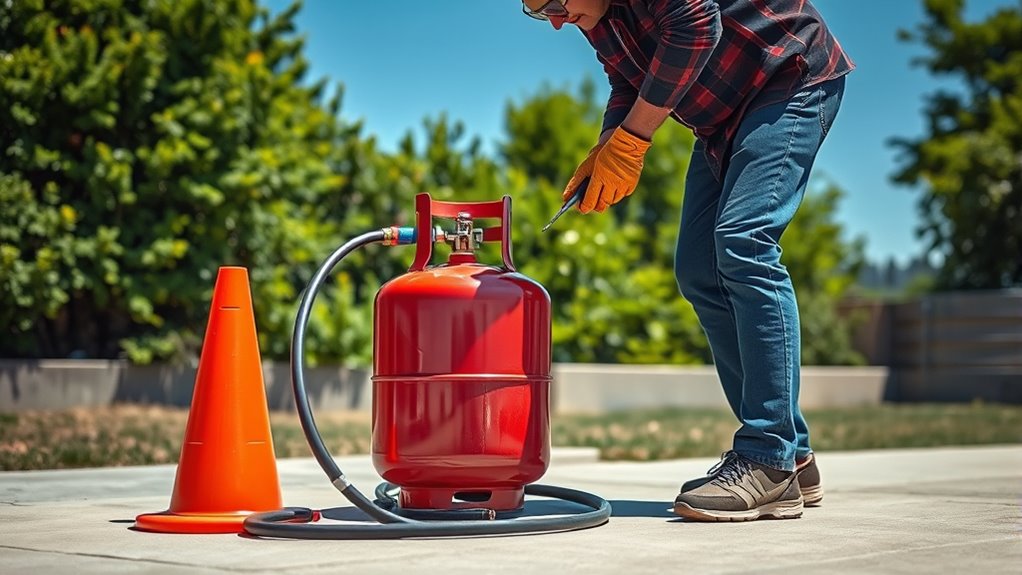

When refilling propane tanks, make certain you work in a well-ventilated area away from heat sources, sparks, or open flames. Confirm caps or valves are tightly closed and do not overfill beyond the recommended 80% level to allow for expansion. Always handle tanks upright and secure them properly during transportation. Keep a fire extinguisher nearby, and know how to respond quickly to leaks or fires. Following these safety tips helps prevent accidents—there’s more to learn for safer refilling practices.

Get garden gear delivered free — and shop member deals
- Fast, free delivery on millions of items
- Access to Prime Big Deal Days deals on October 6–7
- Prime Video, Amazon Music and more included
Key Takeaways
- Work in a well-ventilated area and avoid smoking or sparks during refilling.
- Ensure the propane tank is upright, properly secured, and the valve is closed before refilling.
- Use only the recommended fill level (~80%) to prevent overfilling and allow for expansion.
- Inspect tanks for damage, rust, or corrosion before refilling to minimize leaks and hazards.
- Follow manufacturer instructions or consult trained professionals for safe refilling procedures.
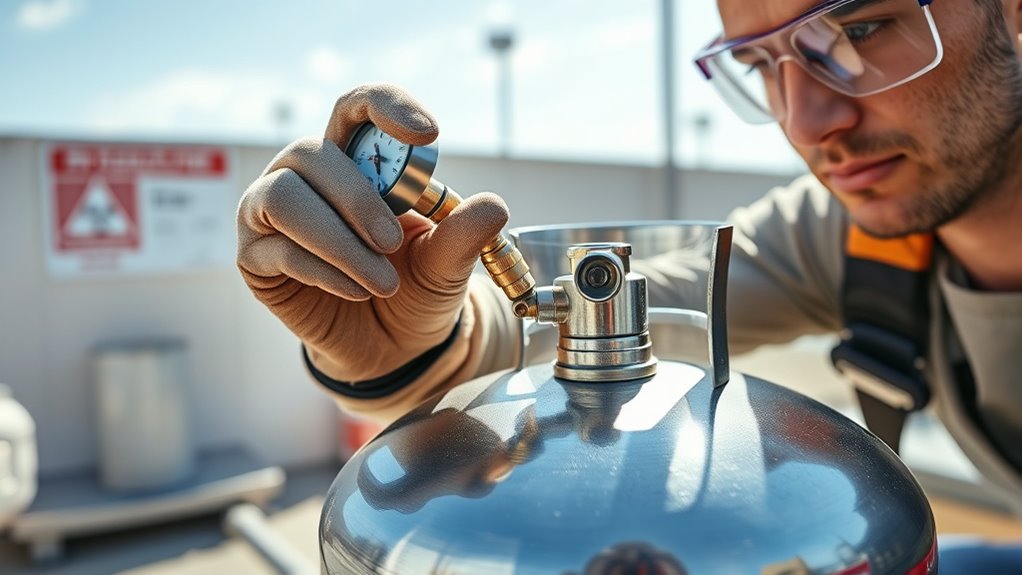
Refilling propane tanks can be safe if you follow proper procedures and precautions. The key to avoiding accidents starts with understanding the importance of adhering to storage regulations. Always ensure your propane tank is stored upright in a well-ventilated area, away from heat sources, open flames, or electrical sparks. Proper storage helps prevent leaks and reduces the risk of fire or explosion. When handling tanks, inspect them for any signs of damage, rust, or corrosion before refilling. If you notice any issues, do not attempt to refill the tank and instead seek professional inspection or replacement. Keeping tanks away from direct sunlight and extreme temperatures also helps maintain their integrity and safety.
Store propane tanks upright in well-ventilated areas, away from heat, flames, and damage for safe refilling.
Before refilling, familiarize yourself with your local regulations and safety standards. Many regions have specific storage regulations that dictate how and where tanks should be stored and refilled. Following these rules not only keeps you compliant but also minimizes hazards for yourself and others. When transporting tanks to a refill station or filling station, make sure they are secured properly in an upright position and that caps or valves are closed tightly. This prevents accidental leaks during transit. Never attempt to overfill a propane tank; always use the recommended fill level, usually around 80% capacity, to allow for expansion as temperatures fluctuate. Overfilling increases the risk of leaks and potential hazards during use.
Preparing for emergency procedures is equally critical. Know how to respond if you suspect a leak or if a fire breaks out during refilling. Keep a fire extinguisher rated for flammable liquids nearby, and ensure you know how to use it properly. If you detect a strong smell of propane or hear a hissing sound, turn off the valve immediately and evacuate the area. Contact emergency services if necessary and avoid any actions that could ignite the gas. It’s also wise to have an emergency plan in place, including clear evacuation routes and communication methods. Additionally, understanding the safety standards and proper handling procedures can significantly reduce risks associated with propane refilling.
Finally, always work in a well-ventilated area and avoid smoking or creating sparks during the refill process. If you’re unsure about any step, consult the manufacturer’s instructions or seek assistance from trained professionals. Following these safety tips, especially regarding storage regulations and emergency procedures, helps ensure that refilling your propane tank remains a safe task. Staying cautious and prepared minimizes risks and keeps you and those around you safe during every refill.
As an affiliate, we earn on qualifying purchases.
Frequently Asked Questions
Can I Refill My Propane Tank at Home Safely?
You shouldn’t refill your propane tank at home because it can be dangerous without proper training. For DIY safety, always follow tank regulations and manufacturer instructions. Refilling improperly can cause leaks, fires, or explosions. Instead, take your tank to a certified refill station where trained professionals handle the process safely. Protect yourself and others by avoiding home refilling and sticking to licensed services for your propane needs.
What Signs Indicate My Propane Tank Needs Replacement Instead of Refilling?
Your tank isn’t just old; it’s practically begging for replacement if you notice severe tank corrosion or valve damage, which are clear signs you shouldn’t risk refilling it. Look for rust, dents, or leaks—these issues signal danger and mean a new tank is a safer choice. Don’t ignore these warning signs, because trying to refill a compromised tank could lead to serious accidents or explosions. Always prioritize safety first.
How Do I Check for Leaks After Refilling a Tank?
After refilling your propane tank, you should perform leak detection using simple inspection methods. First, mix a solution of soap and water, then apply it to the tank’s connections and valves. Turn on the gas without igniting it, and watch for bubbles forming. If you see bubbles, it indicates a leak. If that happens, turn off the gas immediately and tighten or replace faulty parts before using your tank again.
Is It Safe to Refuel My Propane Tank in Hot Weather?
Proceed with caution when refilling your propane tank in hot weather. High temperatures can cause pressure buildup, making refilling procedures risky. It’s safest to avoid refilling during the hottest parts of the day and wait until the temperature drops. Always check the tank’s pressure gauge and follow manufacturer guidelines. Prioritizing temperature safety guarantees you prevent potential hazards, protect yourself, and promote proper propane handling practices.
Are There Legal Restrictions on Refilling Propane Tanks Myself?
You should know that legal restrictions and refill regulations often limit or prohibit you from refilling propane tanks yourself. Many areas require certified professionals to handle refilling due to safety concerns. Check local laws and regulations before attempting to refill. Ignoring these rules can lead to fines, safety hazards, or voiding warranties. Always prioritize safety and legal compliance to avoid accidents or penalties when dealing with propane tanks.
fire extinguisher for flammable liquids
As an affiliate, we earn on qualifying purchases.
As an affiliate, we earn on qualifying purchases.
Conclusion
Remember, handling propane tanks is like walking a tightrope—you need focus and caution to stay balanced. Always follow safety tips and never rush the process. Think of each refill as tending to a delicate flame; if you’re careless, it can ignite a dangerous situation. By staying vigilant and respectful of the fuel, you keep yourself and others safe. Treat propane with the respect it deserves, and you’ll keep the sparks flying only in your outdoor adventures, not in accidents.
As an affiliate, we earn on qualifying purchases.
As an affiliate, we earn on qualifying purchases.
Fall Picks
fall essentials
As an affiliate, we earn on qualifying purchases.