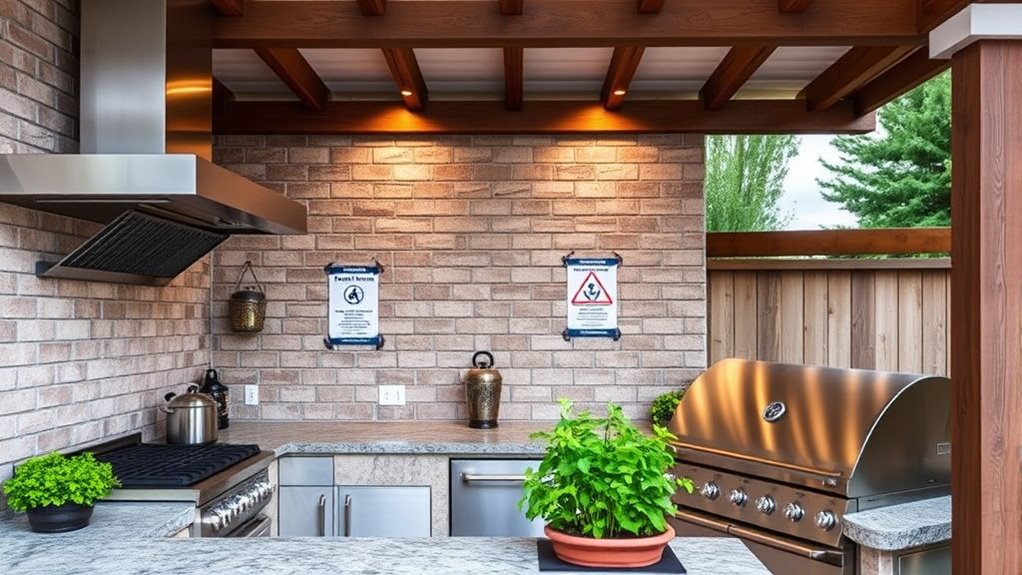
To understand building codes for outdoor kitchens, you need to know that permits are usually required for electrical, plumbing, and structural work. You must guarantee your setup meets safety standards like proper wiring, gas line installation, setbacks, and ventilation. Failing to comply can lead to fines, delays, or even having to remove your project. By following proper guidelines and consulting local authorities or professionals, you’ll create a safe, durable outdoor kitchen. Keep going to learn more about these regulations.

Get garden gear delivered free with Prime
- Fast, free delivery on millions of items
- Prime Video, Amazon Music and more included
- Member-only deals all year
Key Takeaways
- Permitting is often required for outdoor kitchens to ensure compliance with local safety and structural standards.
- Electrical, plumbing, and gas installations must meet specific codes and typically require licensed professionals.
- Setback distances, ventilation, and fire safety regulations are crucial components of building codes.
- Failing to comply can result in fines, project delays, or mandated modifications.
- Consulting local authorities or professionals helps ensure your outdoor kitchen meets all relevant building codes.
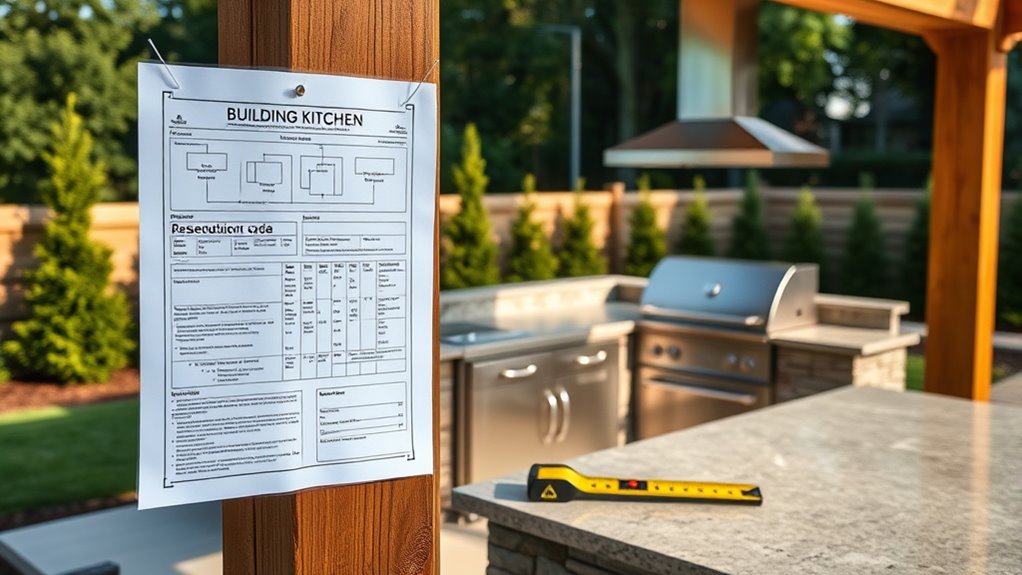
Are you planning to build an outdoor kitchen? Before you start, it’s essential to understand the building codes that govern your project. One of the first steps is to research permitting requirements in your area. Permits are often necessary for outdoor kitchens because they involve structural elements, electrical work, and plumbing—things that need to meet local standards for safety and durability. Skipping this step can lead to fines, delays, or even having to tear down your work if it doesn’t comply with regulations. Contact your city or county building department to find out what permits are needed and what documentation you’ll need to submit. This process guarantees your project aligns with local codes and helps you avoid costly mistakes.
Along with permits, safety regulations are a critical part of building an outdoor kitchen. These regulations are designed to protect you, your family, and your neighbors. For example, electrical wiring must meet specific standards to prevent fire hazards, and gas lines should be installed by licensed professionals to avoid leaks or explosions. Additionally, setbacks from property lines, structures, and combustible materials are typically mandated to reduce fire risks. These safety regulations often specify minimum distances between your cooking appliances and other structures. They also address ventilation requirements, especially if you plan to include a built-in grill or smoker, to prevent smoke buildup and ensure proper airflow. Ignoring these regulations not only endangers lives but can also result in fines or the need to modify or dismantle your outdoor kitchen later. To ensure compliance, it’s helpful to consult with professionals experienced in local building codes and regulations.
Understanding the permitting process and safety regulations can seem overwhelming, but it’s worth the effort to do it right from the start. Many local authorities provide detailed guides or online resources outlining the specific codes you need to follow. Sometimes, hiring a licensed contractor familiar with local building codes can streamline the process and ensure everything is up to code. Keep in mind that inspections will likely be part of the process—inspectors verify that your outdoor kitchen is built safely and according to regulations before giving final approval. This step provides peace of mind that your outdoor cooking space is both functional and safe for years to come. By paying attention to permitting requirements and safety regulations, you’re making a smart investment that prevents future headaches and guarantees your outdoor kitchen is compliant with all local standards. Additionally, understanding building codes for outdoor kitchens can help you plan your space more effectively and avoid costly modifications later.
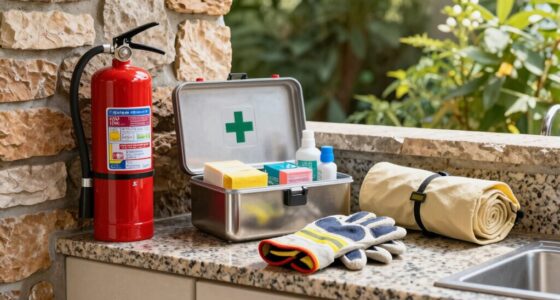
outdoor kitchen permits and safety equipment
As an affiliate, we earn on qualifying purchases.
As an affiliate, we earn on qualifying purchases.
Frequently Asked Questions
Are There Specific Permits Required for Outdoor Kitchen Construction?
Yes, you typically need permits for outdoor kitchen construction. You should start with the permitting process, which varies by location, to make certain your project complies with local zoning regulations. Check with your city or county building department to determine specific requirements. Obtaining the necessary permits helps you avoid fines, ensures safety, and guarantees your outdoor kitchen meets all legal standards. Always verify these details before beginning construction.
How Do Building Codes Vary Between Different Municipalities?
Building codes vary between municipalities due to differences in regional regulations and local priorities. You should check with your local building department, as some areas have stricter rules on outdoor kitchen construction, including electrical, plumbing, and safety standards. These municipality differences mean you might need specific permits or inspections. Always research your area’s regulations beforehand to guarantee your outdoor kitchen complies with all local codes and avoids issues during construction or inspection.
What Are the Fire Safety Requirements for Outdoor Kitchens?
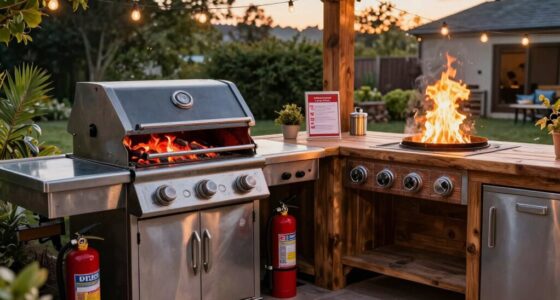
You need to prioritize fire safety in your outdoor kitchen. Place a fire extinguisher within easy reach, ideally near the cooking area, so you can act quickly if needed. Make sure to adhere to flammable material restrictions—keep combustible items away from heat sources and use fire-resistant materials where possible. These precautions help protect your space and ensure safety, giving you peace of mind while cooking outdoors.
Are There Special Electrical Codes for Outdoor Kitchen Appliances?
Yes, there are special electrical codes for outdoor kitchen appliances. You need to guarantee electrical safety by following local electrical safety standards and appliance standards. Use weather-resistant outlets, GFCI protection, and outdoor-rated wiring to prevent electrical hazards. Always check with your local building department for specific requirements, and consider hiring a licensed electrician to ensure your outdoor kitchen wiring complies with all applicable codes and safety guidelines.
How Can I Ensure My Outdoor Kitchen Meets All Local Zoning Restrictions?
To make certain your outdoor kitchen meets local zoning restrictions, start by checking setback requirements from your property line, which vary by area. Contact your local zoning office or review zoning maps and ordinances online. Make sure your plans respect these setbacks and any specific restrictions on outdoor structures. Getting permits and approval before construction helps you avoid fines or required modifications, keeping your project compliant and hassle-free.
outdoor kitchen electrical wiring kit
As an affiliate, we earn on qualifying purchases.
As an affiliate, we earn on qualifying purchases.
Conclusion
By understanding building codes, you can confidently design your outdoor kitchen, turning your backyard into a safe, inviting oasis. Picture yourself grilling under string lights, with a sturdy countertop and a cozy seating area, all compliant with safety standards. When you follow the rules, you’ll create a space where memories are made and worries are left behind. Your outdoor haven awaits—built on a solid foundation of knowledge and safety.
gas line installation kit for outdoor kitchen
As an affiliate, we earn on qualifying purchases.
As an affiliate, we earn on qualifying purchases.
outdoor kitchen ventilation system
As an affiliate, we earn on qualifying purchases.
As an affiliate, we earn on qualifying purchases.
Evergreen bestsellers Picks
bestsellers
As an affiliate, we earn on qualifying purchases.