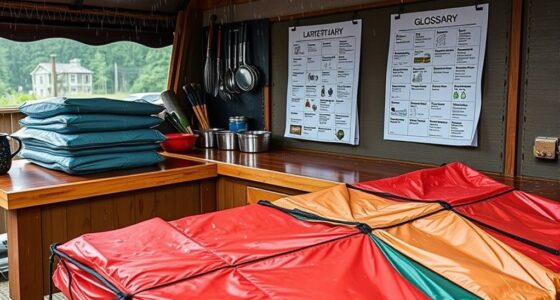
To safeguard your outdoor kitchen in coastal climates, choose salt-resistant materials like stainless steel appliances with corrosion-resistant finishes and weatherproof cabinetry made from treated wood, composites, or high-quality plastics. Regular maintenance, such as cleaning with salt-removing solutions and applying protective coatings, also helps prolong durability. Investing in these durable options ensures your outdoor space withstands salt air and harsh weather. Keep exploring to discover more tips for maintaining your coastal outdoor kitchen effectively.
Key Takeaways
- Use corrosion-resistant finishes like stainless steel with specialized coatings for metal appliances and hardware.
- Select weatherproof cabinetry made from composite, treated wood, or high-quality plastics designed for moisture and salt exposure.
- Regularly clean surfaces with salt-removing solutions and apply outdoor-specific protective coatings to extend material lifespan.
- Choose materials specifically designed to resist rust, salt spray, and humidity common in coastal environments.
- Proper maintenance and protective treatments ensure outdoor kitchen durability and reduce long-term repair costs.

Outdoor kitchens offer a great way to enjoy cooking and entertaining outside, but they also require proper protection to withstand weather and pests. In coastal climates, the salty air can be particularly harsh, accelerating corrosion and damaging your outdoor setup. To keep your space looking great and functioning well over time, choosing materials with corrosion resistant finishes is essential. These finishes create a barrier that shields metal surfaces from rust and deterioration caused by salt and humidity. Stainless steel appliances and hardware with specialized coatings are excellent options, as they resist corrosion better than standard finishes. Additionally, selecting weatherproof cabinetry is vital. Weatherproof cabinetry is designed to handle moisture, salt spray, and temperature fluctuations without warping, swelling, or rotting. Look for cabinets made from composite materials, treated wood, or high-quality plastics that won’t succumb to the elements.
When planning your outdoor kitchen, consider the durability of every component. For instance, hardware like hinges, handles, and fasteners should feature corrosion resistant finishes, ensuring they won’t rust or seize up after exposure to salty air. This not only prolongs their lifespan but also reduces maintenance needs. Investing in weatherproof cabinetry means your storage stays intact and functional year-round, regardless of weather changes. These cabinets often come with sealed joints and water-resistant surfaces, making cleanup easier and protecting your stored items from moisture damage. Choosing durable materials is key to maintaining the integrity of your outdoor kitchen in coastal conditions.
Maintenance plays a key role in protecting your outdoor kitchen. Regular cleaning with gentle, salt-removing solutions helps prevent salt buildup on surfaces. Applying protective coatings designed for outdoor use can also extend the life of your finishes. When installing new equipment or cabinetry, opt for products specifically designed for coastal environments, emphasizing corrosion resistant finishes and weatherproof features. This foresight will save you time and money by reducing repairs and replacements in the long run.
Ultimately, protecting your outdoor kitchen in a coastal setting hinges on choosing the right materials and finishes. Corrosion resistant finishes and weatherproof cabinetry form the backbone of a durable outdoor space. They ensure that your investment withstands the relentless assault of salt air and weather, maintaining their appearance and functionality. By prioritizing these features from the outset, you create a resilient outdoor kitchen that’s ready for years of enjoyment, no matter what the coastal climate throws at it.
Frequently Asked Questions
How Often Should Salt-Resistant Materials Be Inspected for Damage?
You should inspect salt-resistant materials at least every three to six months, especially after storms or heavy salt exposure. Regular inspection helps catch early signs of damage, allowing you to prevent deterioration and extend the lifespan of your outdoor kitchen. By maintaining a consistent inspection frequency, you can effectively prevent damage, ensuring your outdoor setup remains resilient against coastal elements. Don’t wait too long—proactive checks save money and preserve your investment.
Are There Eco-Friendly Salt-Resistant Options Available?
Yes, eco-friendly alternatives for salt-resistant materials exist, helping you protect your outdoor kitchen sustainably. You can choose from sustainable materials like recycled composites, bamboo, or naturally resistant stones, which resist salt damage without harming the environment. These options not only extend your kitchen’s lifespan but also reduce your ecological footprint. By opting for these eco-friendly choices, you enjoy a resilient outdoor space that aligns with your commitment to sustainability.
Can Salt-Resistant Materials Be Used for Outdoor Furniture?
Yes, you can use salt-resistant materials for outdoor furniture. Look for options with marine grade finishes and corrosion resistant fabrics, which are designed to withstand salty coastal air. These materials help prevent rust and deterioration, ensuring your furniture stays durable and attractive over time. By choosing furniture with these features, you’ll enjoy outdoor spaces that are both stylish and resilient, perfect for coastal environments.
What Maintenance Is Required for Salt-Resistant Outdoor Kitchen Surfaces?
You should regularly clean your salt-resistant outdoor kitchen surfaces with mild soap and water to remove salt deposits and prevent buildup. Applying protective coatings periodically helps maintain their resistance to salt corrosion. Additionally, inspect surfaces for any damage or wear, and reapply coatings as needed. Consistent cleaning routines and timely reapplications guarantee your outdoor kitchen stays durable and attractive in coastal environments.
Do Salt-Resistant Materials Increase the Cost of Outdoor Kitchen Construction?
They say “you get what you pay for,” and salt-resistant materials do often increase the cost implications of your outdoor kitchen. While they might be pricier upfront, their enhanced material durability helps prevent corrosion and damage caused by salt exposure. This means you’ll save money on repairs and replacements over time, making the initial investment worthwhile for a long-lasting, resilient outdoor cooking space.
Conclusion
To keep your outdoor kitchen in top shape, using salt-resistant materials is essential in coastal climates. Did you know that salt corrosion can degrade metal surfaces by up to 80% in just five years? By choosing the right materials, you’ll extend the lifespan of your setup and enjoy worry-free outdoor cooking. Protecting your investment means less maintenance and more time savoring those seaside meals. Stay proactive, and your outdoor kitchen will thrive for years to come.