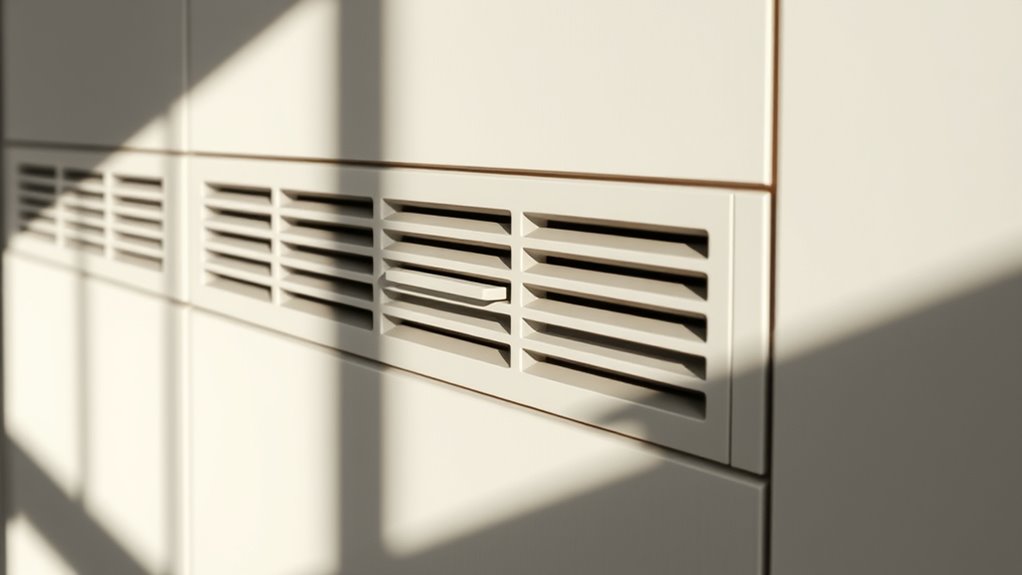

To guarantee proper airflow in built-in cabinets, you should include ventilation panels strategically positioned near the top and bottom to promote natural convection. Use perforated or mesh panels to allow air to circulate while protecting stored items. Avoid blocking airflow with shelves or drawers, and consider moisture-resistant materials for humid environments. Proper placement and sizing of these panels help prevent moisture buildup, mold, and damage. Continuing will reveal more tips to optimize your cabinet ventilation effectively.
Key Takeaways
- Proper placement of ventilation panels at top and bottom promotes natural convection airflow.
- Use perforated or mesh panels to balance airflow with dust and privacy protection.
- Strategic vent positioning avoids airflow obstruction by shelves and drawers, ensuring effective circulation.
- Panel size and perforation pattern influence airflow volume and direction within the cabinet.
- Considering environmental humidity levels guides material choices and panel design for optimal ventilation.
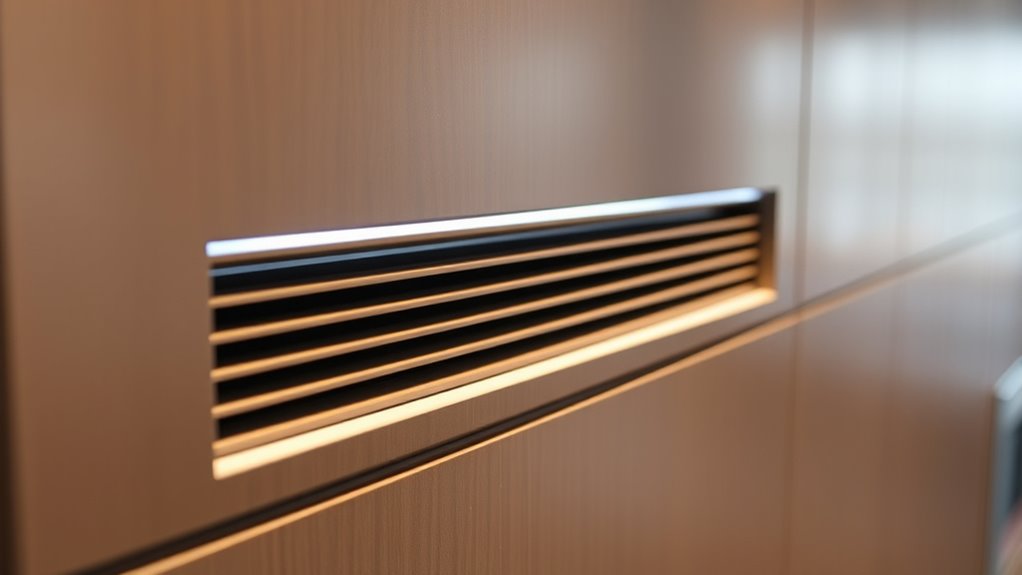
Proper ventilation panels are indispensable for maintaining efficient airflow in any space. When it comes to built-in cabinets, ensuring proper airflow design is critical to prevent moisture buildup, mold growth, and deterioration of stored items. The way you approach panel placement directly influences how air moves through the cabinet, affecting both its longevity and functionality. To optimize airflow, you need to consider how the panels are positioned within the cabinet structure—whether they serve as vents, grille panels, or perforated sections. Thoughtful panel placement allows fresh air to circulate freely while expelling stale air, creating a balanced environment inside.
You should start by evaluating the cabinet’s overall design and purpose. For example, cabinets used for storing clothes, food, or tools may have different airflow requirements. Once you understand these needs, you can strategically plan where to place ventilation panels. Typically, panels are best positioned near the top and bottom of the cabinet. This arrangement encourages natural convection—hot air rises and exits through upper panels, while cooler, fresh air enters through lower panels. This airflow pattern helps maintain a consistent temperature and humidity level inside the cabinet, which is essential for preserving contents.
When designing panel placement, avoid blocking the natural pathways of airflow. Incorporate perforations or mesh panels that allow air to pass through without compromising the cabinet’s structural integrity or appearance. The size and distribution of these perforations matter; larger or more numerous openings increase airflow but might reduce privacy or protection from dust. Striking the right balance depends on what you’re storing and the environment. For example, in humid areas, larger panels with moisture-resistant materials can improve ventilation efficiency.
Additionally, consider the placement of panels relative to other cabinet features. If shelves or drawers are in the way, airflow might be restricted. You might need to add additional panels or adjust existing ones to ensure air can circulate behind and around stored items. Proper airflow design isn’t just about drilling holes; it’s about planning a system where air intake and exhaust points are optimized. Use a combination of panel placement and strategic vents to create a continuous airflow path that refreshes the interior space. Incorporating ventilation principles based on natural convection can significantly enhance the cabinet’s overall airflow efficiency.
Frequently Asked Questions
How Do Ventilation Panels Affect Cabinet Durability?
Ventilation panels boost your cabinet durability by improving air circulation and moisture control. They prevent humidity buildup, which can cause warping, mold, or rot over time. By allowing fresh air to flow through, these panels help maintain a stable environment inside your cabinets, protecting your belongings and ensuring the structure stays strong. Proper ventilation is essential for extending the lifespan of built-in cabinets and keeping them looking their best.
Are There Specific Materials Best for Ventilation Panels?
You should choose materials like metal, plastic, or wood for ventilation panels, as they offer durability and good airflow. Metal panels are sturdy and resistant to warping, while plastic options are lightweight and easy to maintain. Wood panels can blend seamlessly with your cabinetry if designed properly. When selecting panel design, opt for slats or perforations to maximize airflow while maintaining aesthetic appeal and structural integrity.
How Can I Customize Airflow for Different Cabinet Contents?
You can customize airflow for your cabinet content by installing adjustable ventilation panels or adding small vents that can be opened or closed as needed. For delicate items like electronics or artwork, increase airflow with larger or more frequent vents. For less sensitive contents, reduce airflow with smaller openings. This approach gives you control over ventilation, ensuring your cabinet contents stay properly ventilated without excess airflow that could cause damage.
Do Ventilation Panels Impact the Overall Aesthetic of Built-In Cabinets?
You might think ventilation panels are an eyesore, but ironically, they can actually enhance aesthetic integration. By choosing sleek, discreet designs, you maintain your cabinet’s style while ensuring proper airflow. This design versatility allows you to blend function with form seamlessly, making ventilation panels a smart, stylish addition rather than an unwanted distraction. So, don’t worry—they can complement your cabinet’s look rather than disrupt it.
What Are the Maintenance Requirements for Ventilation Panels?
You should clean the ventilation panel filters regularly to prevent dust buildup and guarantee proper airflow. Check the panels periodically for any damage or blockage, and replace them if they become cracked or broken. Keeping the filters clean and replacing panels when needed helps maintain good airflow, reduces strain on your ventilation system, and prolongs the life of your built-in cabinets. Regular maintenance keeps everything functioning smoothly.
Conclusion
By understanding ventilation panels and airflow needs, you guarantee your built-in cabinets stay in top shape. Proper airflow keeps moisture and mold at bay, saving you time and money down the road. Remember, a well-ventilated cabinet is like a breath of fresh air—it keeps everything running smoothly. Don’t ignore these essential details; they’re the backbone of a durable, beautiful storage solution that stands the test of time.